Best Peptides for Fat Loss Research 2026: A Comparative Guide
Why are 68% of metabolic studies still struggling to differentiate between simple appetite suppression and genuine cellular lipolysis? You’ve likely...
 Are you over 18 years old?
This website requires you to be 18 years or older to enter our website and see the content.
Are you over 18 years old?
This website requires you to be 18 years or older to enter our website and see the content.

Getting started with peptide injections might seem a bit much at first, but honestly, it’s pretty straightforward once you get the hang of it. This guide is all about the peptide syringe – how to use it, what to look out for, and how to make sure you’re doing it right. We’ll cover everything from what the syringe is for to how to toss it out safely afterwards. Think of it as your go-to for making sure your peptide therapy goes smoothly.
The peptide syringe is a pretty straightforward tool, but it’s really important for getting peptides into your body the way they’re supposed to go. Peptides are these small chains of amino acids, and when you use them for therapy, you’re basically trying to get them to do specific jobs in your body, like helping with tissue repair or managing certain hormones. Oral supplements often break down too much in your stomach to be effective, so injecting them directly is usually the way to go. This bypasses your digestive system, meaning more of the peptide actually gets where it needs to be to work. The syringe is the bridge between the peptide in its vial and your body. It’s designed to accurately measure and deliver the dose, making sure you get the intended effect without too much fuss.
When you get a peptide syringe kit, it usually comes with a few main things. You’ll have the syringe itself, which is a plastic tube with measurement markings and a plunger to push the liquid out. Attached to the syringe is a needle, which is what actually goes into your skin. The size of the needle can vary, but for most peptide injections, especially under the skin, they’re pretty fine – think around 29 to 31 gauge. You’ll also typically find alcohol swabs in the kit. These are super important for cleaning the area before you inject and also for wiping down the top of the peptide vial to keep things sterile. Sometimes, you might also get a separate needle for drawing the liquid from the vial and a different, smaller needle for the actual injection, though often it’s just one needle for both.
Lots of different peptides can be given using a syringe, and it really depends on what you’re trying to achieve. For example, peptides like BPC-157 are often used for healing and recovery, and they’re typically injected. Then there are others like Ipamorelin or CJC-1295, which are growth hormone secretagogues, meaning they encourage your body to release more growth hormone. These are also commonly injected. Even some peptides used for skin health or anti-aging purposes, like GHK-Cu, are administered this way. The method of injection – whether it’s just under the skin (subcutaneous) or into a muscle (intramuscular) – can sometimes depend on the specific peptide and what your doctor recommends for the best results.
It’s really important to remember that while using a syringe might seem simple, it’s a medical procedure. Following instructions precisely and keeping everything clean are the most important steps to avoid any problems. Always double-check your dosage and the type of peptide you’re using.
Getting ready for your peptide injection is a really important step. It’s not just about having the stuff; it’s about making sure everything is clean and you’re set up for success. A little bit of preparation goes a long way in making the whole process smoother and safer.
Before you even think about touching a needle, you need to have all your supplies laid out and ready. This prevents you from scrambling mid-process, which is when mistakes can happen. You’ll want:
Sterility is non-negotiable when it comes to injections. You don’t want to introduce any unwanted bacteria into your body. Start by washing your hands thoroughly with soap and warm water. Dry them completely with a clean towel. Then, take an alcohol swab and wipe down the rubber stopper on your peptide vial. Let it air dry for a moment before proceeding. This simple step significantly reduces the risk of contamination.
This is where precision really matters. You need to get the exact amount of peptide prescribed by your doctor. Here’s how:
Always double-check your drawn dosage against your prescription before proceeding to the injection site. Accuracy here prevents under or overdosing, which can affect your treatment’s effectiveness and safety.
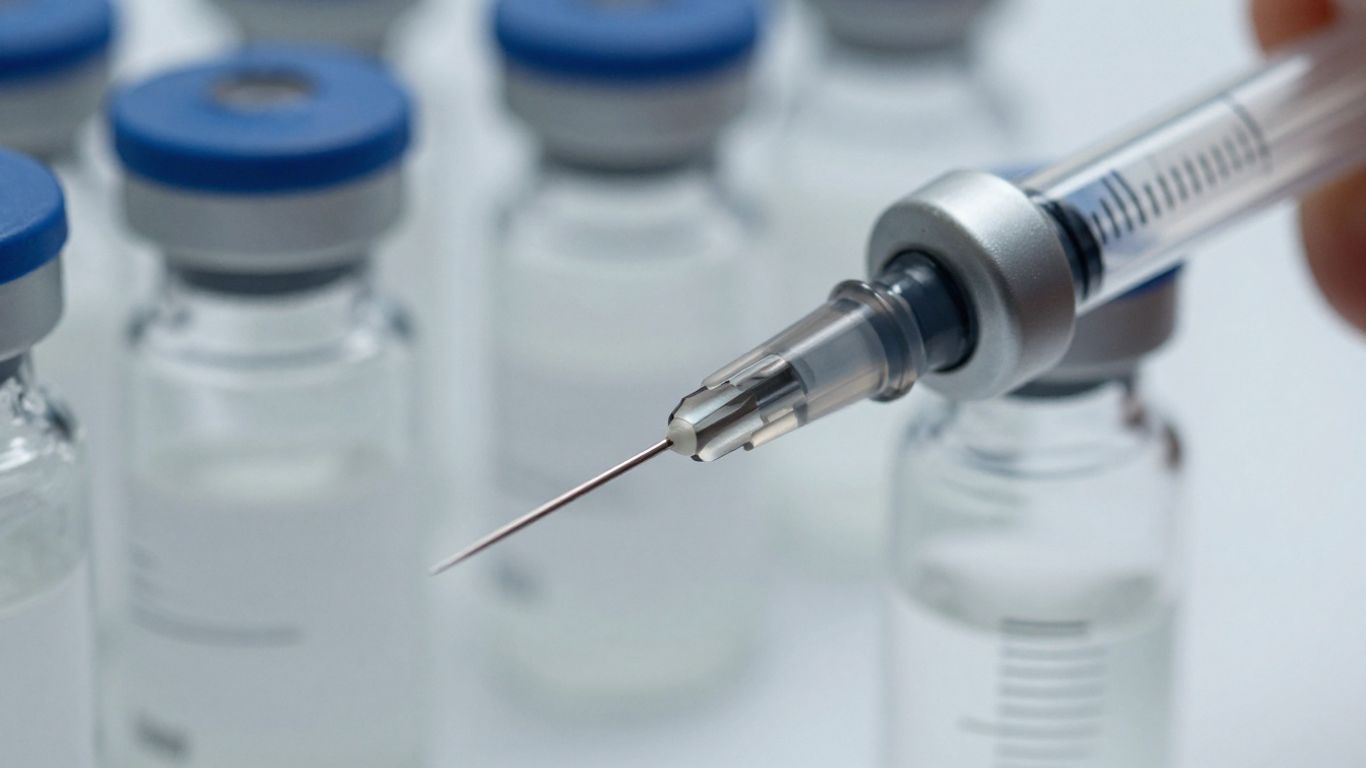
Choosing the right spot for your peptide injection is pretty important for both effectiveness and comfort. Generally, you’ll be looking at two main types of injections: subcutaneous and intramuscular. Subcutaneous means injecting into the fatty layer just under your skin. Think of areas like the abdomen (but stay a couple of inches away from your belly button), the outer part of your thighs, or the back of your upper arms. These spots have plenty of that soft tissue where the peptide can be absorbed nicely. Intramuscular injections go deeper, straight into the muscle. Common places for this are the deltoid muscle in your arm, the vastus lateralis in your thigh, or the gluteus medius in your upper buttock. The choice between these often depends on the specific peptide you’re using and what your doctor recommends. It’s a good idea to keep a log of where you inject so you can rotate sites. This helps prevent any irritation or lumps from forming in one spot.
When it’s time to actually give yourself the shot, the angle of the needle matters. For subcutaneous injections, you’re aiming for that layer of fat. You’ll typically pinch the skin gently to create a small fold, and then insert the needle at either a 45-degree or a 90-degree angle. The exact angle can depend on how long your needle is and how much fatty tissue you have in that area. A shorter needle might go in at 90 degrees, while a longer one might be better at 45 degrees. The goal is to get into the fat, not the muscle underneath. For intramuscular injections, it’s a different story. You’ll insert the needle straight in at a 90-degree angle, going all the way into the muscle tissue. This requires a bit more confidence and a firm push, but it’s necessary for peptides that need to reach the muscle for absorption.
Let’s walk through the actual injection. First, make sure you’ve got everything ready and your hands are clean. Pick your spot and clean it well with an alcohol swab, letting it air dry completely. If you’re doing a subcutaneous injection, gently pinch up a bit of skin and fat. Hold the syringe like you would a pencil or a dart. Now, insert the needle at the correct angle – 45 to 90 degrees for subcutaneous, or a straight 90 degrees for intramuscular. Once the needle is in, slowly push the plunger down to inject the peptide. Try to do this steadily; it helps with comfort. After the full dose is in, quickly pull the needle straight out. You can then apply gentle pressure with a clean cotton ball or gauze to the site. Don’t rub it, as that can cause irritation. Finally, and this is super important, immediately put the used syringe and needle into a sharps container.
Proper technique isn’t just about getting the medicine in; it’s about doing it safely and minimizing any potential issues. Paying attention to details like cleaning the site, the needle angle, and injecting slowly can make a big difference in your experience and the effectiveness of the treatment.
Even with the best preparation, injections can sometimes feel a bit uncomfortable. It’s totally normal to feel a little anxious about it, but there are definitely ways to make the whole process smoother and reduce any potential issues. Thinking ahead and being mindful during the injection can make a big difference.
Making sure your injection is as comfortable as possible involves a few key steps. It’s not just about the needle itself, but also how you prepare and handle everything.
While most people tolerate peptide injections well, it’s good to know what might pop up and what to do about it. Usually, these are minor and resolve on their own.
It’s important to remember that these are generally localized reactions. If you notice any signs of infection, such as increasing redness, warmth, pus, or fever, you should contact your healthcare provider immediately. Allergic reactions, though rare, can be more serious and require prompt medical attention.
Most of the time, you’ll be fine managing your injections at home. However, there are times when it’s best to get in touch with your doctor or a healthcare professional.
After you’ve finished your peptide injection, what you do with the syringe is just as important as how you prepared and administered it. It’s not just about tidiness; it’s about safety for yourself and others.
Keeping your peptides stored correctly is key to their effectiveness. Most peptides need to be kept in the refrigerator, typically between 2°C and 8°C (36°F to 46°F). Always check the manufacturer’s instructions, as some might have different requirements. It’s also a good idea to protect them from direct light and heat. If you’ve reconstituted a peptide, remember that it usually has a limited shelf life, often around 14 to 28 days, even when refrigerated. If you notice any changes in color, clarity, or see particles in the solution, it’s best to discard it.
When it comes to the syringe itself, keep all components clean and dry until you’re ready to use them. Store them in a way that prevents contamination.
Proper disposal of used needles and syringes is crucial for safety and preventing accidental needle sticks. Once you’re done with an injection, the syringe and needle should go straight into a designated sharps container. These containers are made of puncture-resistant plastic and are designed to safely hold used needles and other sharp medical waste. You can often get these from your local pharmacy.
If a sharps container isn’t immediately available, a sturdy, puncture-resistant household container, like a thick plastic laundry detergent bottle with a secure lid, can be used as a temporary measure. Make sure to label it clearly as "SHARPS." Never try to recap a used needle.
Here’s a quick rundown on what goes where:
It’s important to follow your local guidelines for sharps disposal. Some communities have specific drop-off locations or mail-back programs. You can find more information on safe and legal disposal methods through resources like your local health department.
After you’ve disposed of your syringe, take a moment to clean up. If there’s any minor bleeding at the injection site, you can apply gentle pressure with a clean cotton ball or gauze. Avoid rubbing the area, as this can cause irritation. Wash your hands thoroughly with soap and water after handling any injection supplies, even if you wore gloves. This simple step helps prevent the spread of germs and keeps your injection area clean. If you experience any unusual redness, swelling, or discomfort that persists, it’s always wise to consult with your healthcare provider.
When you’re done with your peptide syringe, it’s important to get rid of it the right way. Don’t just toss it in the regular trash! Proper disposal keeps everyone safe and prevents any accidental pokes. For detailed instructions on how to safely dispose of your used syringes, check out our guide on the Peak Haven website.
So, we’ve gone through the whole process of using your peptide syringe. It might seem like a lot at first, but really, it’s about being careful and following the steps. We talked about getting everything ready, picking the right spot, and actually giving the injection. Remember to always keep things clean and toss your used needles safely. If you stick to what we’ve covered, you’ll get more comfortable with it. It’s not rocket science, just a bit of practice and attention to detail. Keep at it, and you’ll be a pro in no time.
A peptide syringe is a special tool used to inject small amounts of medicine called peptides. Peptides are like tiny messengers in your body that can help with healing, growth, and other important jobs. The syringe is designed to accurately measure and deliver these peptides just under your skin or into a muscle, making sure you get the right amount for your treatment.
Keeping things clean is super important to avoid getting sick. First, wash your hands really well with soap and water. Then, use an alcohol wipe to clean the top of the medicine bottle and the spot on your skin where you’ll give the shot. This helps kill any germs that could cause an infection.
Injecting under the skin, called subcutaneous, means putting the medicine into the fatty layer just below your skin. Injecting into a muscle, called intramuscular, means going deeper into the muscle itself. The type of peptide and what it’s supposed to do usually decides which method is best. Your doctor will tell you which one to use.
To make it hurt less, try to relax the area where you’re giving the shot. Use a brand new, sharp needle each time, as dull needles hurt more. Inject the medicine slowly and steadily. Some people find that a quick, firm insertion of the needle helps. You can also ask your doctor about using a numbing cream beforehand.
It’s very important to get rid of used needles and syringes safely. Never throw them in the regular trash. You should put them in a special, strong plastic container called a sharps container. Once the container is full, you can take it to a place that collects medical waste, like a doctor’s office or a special drop-off location.
Most peptides need to be kept cold, usually in the refrigerator, to stay good. Make sure they are protected from light, too. Syringes and needles should be kept in a clean, dry place. Always check the instructions that came with your specific peptide for the best storage advice.
 by
by