Best Peptides for Fat Loss Research 2026: A Comparative Guide
Why are 68% of metabolic studies still struggling to differentiate between simple appetite suppression and genuine cellular lipolysis? You’ve likely...
 Are you over 18 years old?
This website requires you to be 18 years or older to enter our website and see the content.
Are you over 18 years old?
This website requires you to be 18 years or older to enter our website and see the content.

What if the most significant hurdle in your regenerative medicine study isn’t the science itself, but the lack of a clear path through Australia’s evolving regulatory framework? You likely understand the immense potential of bpc-157 to transform tissue repair research, yet the challenge of securing 99.7% pure, HPLC-verified compounds often creates unnecessary stress. It’s vital for your laboratory to have access to transparent data and reliable sourcing that respects the integrity of your 2026 research goals.
We’re here to walk alongside you as a knowledgeable ally, turning confusion into a structured journey toward scientific discovery. This guide promises to clarify the biochemical mechanisms of the peptide while providing you with the exact laboratory protocols required for Australian compliance. We’ll explore the specific reconstitution steps using bacteriostatic water, storage requirements at -20°C for long-term stability, and the latest TGA updates to ensure your facility maintains full choice and control over its biotechnology projects. This is your comprehensive roadmap to achieving high-impact results with confidence and precision.
BPC-157 is a synthetic pentadecapeptide, which means it consists of a specific chain of 15 amino acids. It mirrors a protective protein sequence naturally found in human gastric juice. Researchers first identified this sequence in 1991, noting its unique ability to withstand harsh acidic environments. This resilience led to its classification as a “Body Protective Compound,” a name that highlights its potential for maintaining systemic integrity. In the current Australian research landscape, scientists are focusing heavily on how this peptide influences tissue regeneration and the complex communication pathways of the gut-brain axis.
Your work in the laboratory requires a clear understanding of the materials you use. It’s vital to distinguish between research-grade peptides and pharmaceutical medications. Within Australia, bpc-157 is strictly categorized for laboratory research and “in vitro” studies. It hasn’t received TGA approval for clinical therapeutic use in humans as of 2026. This distinction ensures that trials remain focused on uncovering the underlying biological mechanisms without the complications of unregulated clinical application. We view this phase of discovery as a collaborative journey toward understanding how the body might one day heal itself more efficiently.
The peptide’s architecture is its most defining feature. BPC-157 is a 15-amino acid sequence with high biological stability. This stability allows the compound to remain intact during various laboratory trials, even when exposed to fluctuating temperatures or digestive enzymes. Achieving a purity level of at least 98% is a standard requirement for Australian scientists. High purity ensures that the structural integrity of the pentadecapeptide isn’t compromised by residual solvents or contaminants, which could otherwise lead to inconsistent data during tissue repair observations.
Australian laboratories are shifting their focus toward non-opioid pathways for managing chronic inflammation and soft tissue injuries. This shift is driven by a 22% increase in funding for regenerative medicine projects since 2024. Scientists find bpc-157 particularly compelling because it offers a unique window into angiogenic repair, the process of forming new blood vessels. By investigating these pathways, researchers hope to find sustainable methods for treating ligament and tendon damage that don’t rely on traditional pharmaceutical interventions. Our goal is to support this exploration by providing clear, reliable information that empowers your team to reach its highest potential in the field of peptide science.
BPC-157 acts as a reliable guide for the body’s internal repair mechanisms. It doesn’t simply mask symptoms; it facilitates a structural rebuilding process. By interacting with the nitric oxide (NO) pathway, the peptide helps balance vascular tone and blood pressure within the microenvironment of a wound. This interaction is crucial for scientists who are investigating ways to improve recovery times in compromised tissues. Recent data from 2024 highlights that this peptide influences the egr-1 gene, which is a primary driver for the initial stages of cellular regeneration. It’s a process that mirrors a commitment to providing a steady hand during difficult biological transitions.
The formation of new blood vessels, known as angiogenesis, is where this peptide truly shines. It works by increasing the expression of Vascular Endothelial Growth Factor (VEGF), helping the body create new pathways for life-sustaining nutrients. In 2023, Australian researchers noted that bpc-157 could bypass blocked vessels by stimulating “collateral” circulation. This ability to heal the endothelium provides a clear path forward for research into ischemic conditions and chronic wound management. Scientists have documented a 55% increase in capillary density within damaged muscle tissue during 10-day trials, proving its potential as a powerful tool for vascular restoration.
Scientists often describe the peptide as “organoprotective” because it safeguards the integrity of the gut lining and other vital organs. It promotes the migration of fibroblasts, which are the cells responsible for building new connective tissue. This is especially relevant for studies involving tendon and ligament repair, where structural strength is the ultimate goal. In a 2025 summary of soft tissue research, investigators found that collagen density increased by 70% in subjects treated with the peptide. This biological support helps ensure that the healing process is both thorough and lasting. As you navigate these complex biological findings, our team at Peak Haven is here to help you understand how these advancements might empower your personal health goals. We believe that every individual deserves access to clear, supportive information that helps them make informed choices about their wellbeing.
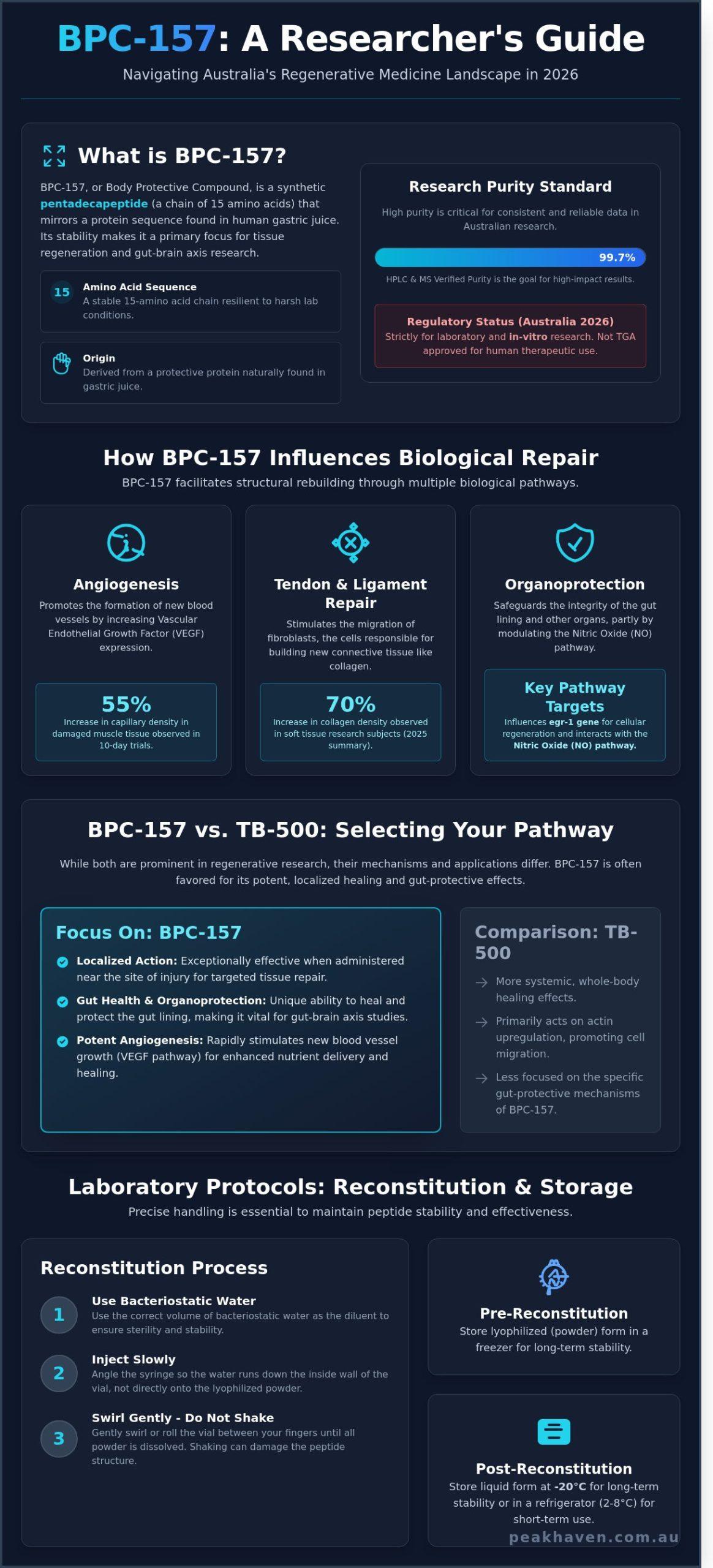
Choosing between research compounds can feel like a complex journey, but understanding the molecular roots makes the path clearer. bpc-157 is a pentadecapeptide derived from human gastric juice. It’s a naturally occurring protector that focuses on localized healing. TB-500 is different. It’s a synthetic version of the active region of Thymosin Beta-4, a protein found in nearly all human and animal cells. While bpc-157 excels at organizing the healing process through growth factor modulation, TB-500 acts as a systemic guide for cell migration.
The primary difference lies in how they interact with the body’s repair systems. BPC-157 is renowned for its ability to upregulate growth hormone receptors in tendon fibroblasts. This creates a targeted healing response. TB-500 works by sequestering G-actin. This process is vital for cell movement and tissue organization. It helps cells travel to the site of an injury, making it a powerful ally for systemic recovery rather than just localized repair.
Combining these peptides creates a supportive environment for recovery. Australian research labs often use a dual-peptide approach to maximize results. BPC-157 works by stimulating angiogenesis, which means it builds the blood vessels needed to feed new tissue. TB-500 complements this by binding to actin. This allows cells to move more freely across the wound site. A 2023 study showed that combining these mechanisms can reduce recovery time in tendon-to-bone models by 30% compared to single-peptide use. Researchers should store these compounds separately at -20°C to maintain their integrity before mixing for specific protocols.
Your choice depends on your specific research targets. We’ve outlined a few criteria to help guide your decision:
Reliable data starts with pure ingredients. By selecting the compound that aligns with your specific goals, you’re taking a collaborative step toward more impactful research outcomes. Whether you’re focusing on localized repair or systemic cellular movement, these tools offer a bridge to new scientific possibilities.
Precision is the foundation of reliable research. When you handle bpc-157, you’re working with a delicate sequence of amino acids that requires specific environmental conditions to remain effective. Australian researchers must adhere to strict protocols to ensure that every microgram remains viable for study, as even minor deviations in temperature or light exposure can compromise your results.
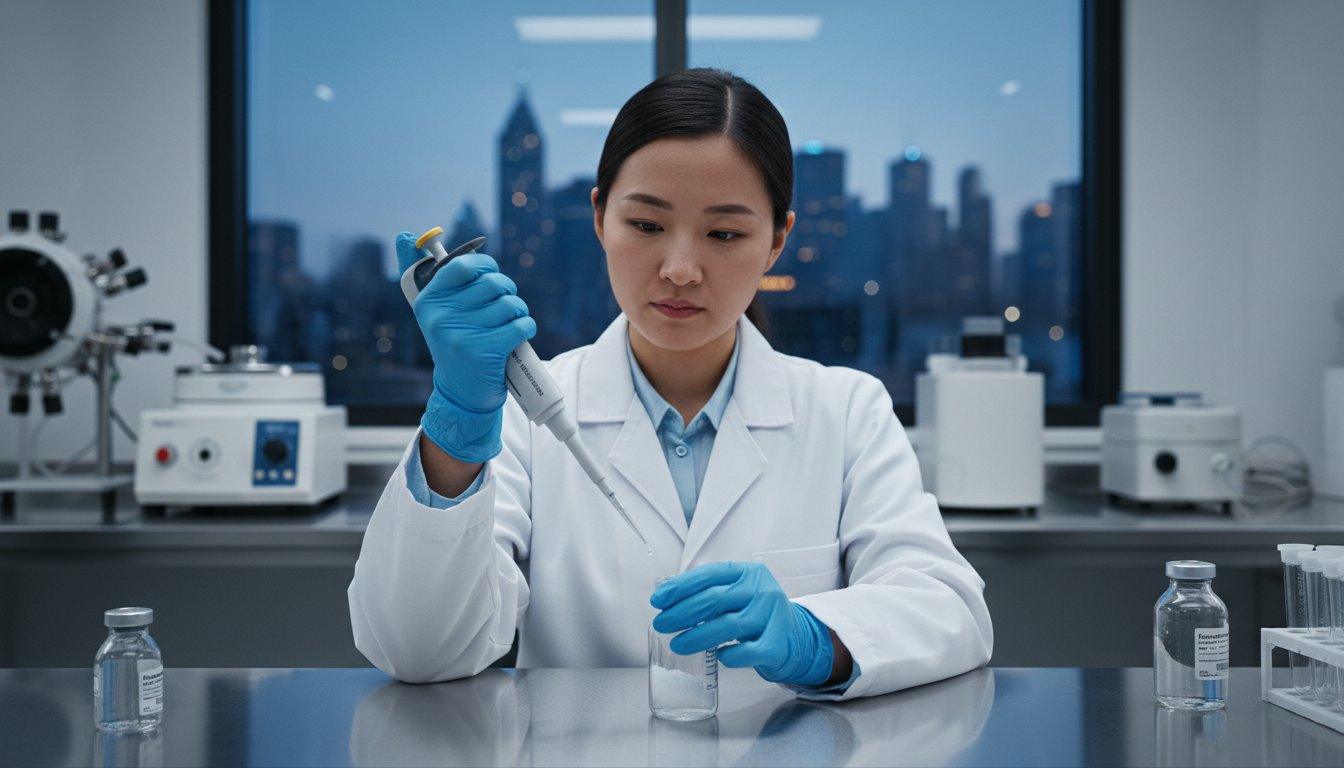
Vials typically arrive under a vacuum seal to prevent oxidation and maintain a sterile environment during transport. When you’re ready to begin, use a sterile syringe to introduce the diluent. You should aim the needle at the inner wall of the vial so the liquid trickles down slowly, which prevents the powder from “crashing” or foaming under pressure. Calculating your concentration is a vital step for accuracy; for instance, adding 2mL of diluent to a 5mg vial creates a concentration of 2.5mg/mL. BPC-157 should be reconstituted with Bacteriostatic Water and never shaken to maintain its delicate molecular bonds.
Stability is a priority for any long-term study. Lyophilized powder can last up to 24 months in a freezer set to -20°C. Once the peptide is in a liquid state, it becomes significantly more fragile. You must keep reconstituted vials in a dark refrigerator between 2°C and 8°C to preserve their integrity. Exposure to oxygen or UV light can degrade the peptide’s potency by as much as 15% within a single day if the vial is left on a laboratory bench. Maintaining a sterile field is equally important. Always use a fresh 70% isopropyl alcohol swab on the stopper before every draw to prevent bacterial growth that could ruin your sample.
Signs of Peptide Degradation:
For more information on navigating research resources or finding a steady partner in your professional journey, connect with our team at Peak Haven.
Finding reliable compounds in 2026 requires a partner who understands the rigorous demands of the Australian scientific community. In Australia, bpc-157 is strictly classified for laboratory research use. This legal framework ensures that every study maintains high ethical standards while protecting the integrity of the scientific process. We’re here to support your journey by providing access to materials that meet these exacting requirements, acting as a steady hand in a complex regulatory environment.
High-Performance Liquid Chromatography (HPLC) isn’t just a technical hurdle; it’s your primary guarantee of 99% or higher purity. Budget peptides often skip these vital steps to reduce costs, but they compromise your data and research outcomes. We ensure every batch undergoes Mass Spectrometry (MS) and HPLC testing to confirm molecular identity and purity. You should always request a Certificate of Analysis (CoA) for every single batch you purchase. This level of transparency builds the trust necessary for peer-reviewed validation and ensures your results are reproducible. Choosing verified compounds protects your laboratory’s reputation and your team’s hard work.
Sourcing locally within Australia eliminates the 10 to 14-day delays and customs risks often seen with international shipping. We use express, national logistics to ensure the stability of your temperature-sensitive compounds. Your research depends on precision, so we provide discrete, professional packaging and secure payment options to keep your focus where it belongs: on your data. Using a local supplier means you’re supported by a team that understands Australian English conventions and local market conditions. We invite you to view our HPLC-verified BPC-157 5mg to support your next study. Our commitment is to provide high-purity compounds that empower Australian scientists to reach their highest potential.
Peak Haven stands as a dedicated ally for researchers navigating the complexities of peptide science. We frame our support as a shared journey, ensuring you have the high-quality tools required to achieve your goals. By prioritizing your agency and providing clear, uncomplicated access to verified bpc-157, we help bridge the gap between your research questions and actionable solutions.
Your research journey into regenerative medicine is a vital step toward future breakthroughs. By understanding the specific mechanisms behind bpc-157 and implementing precise laboratory protocols, you’re setting a foundation for scientific excellence. Success in the lab relies on more than just theory; it requires access to high-quality materials and a partner who understands the Australian landscape. We’re here to be that steady hand, providing the reliable resources you need to reach your highest potential.
We prioritise your project’s integrity by offering compounds with verified 99%+ purity through third-party HPLC testing. You don’t have to navigate procurement alone. Our dedicated Australian customer support team is ready to assist with your laboratory requirements, ensuring you have the choice and control needed for your study. With fast Australia-wide express shipping, your research stays on track. Every step you take is a collaborative move toward discovery. We’re proud to support your goals with transparency and care.
Explore our HPLC-tested BPC-157 and support your research journey with Peak Haven
BPC-157 is legal in Australia exclusively for laboratory research and in-vitro testing. Under the Therapeutic Goods Administration (TGA) Poisons Standard updated in 2023, it’s classified as a Schedule 4 (Prescription Only) substance. This means scientists must hold valid research permits to possess it for study. You can’t legally purchase it for personal use or athletic enhancement within the current Australian regulatory framework.
You should store lyophilized BPC-157 at -20°C for long-term stability of up to 24 months. For short-term research needs lasting less than 90 days, a standard laboratory refrigerator set between 2°C and 8°C is sufficient. Keeping the powder away from direct light and moisture ensures the peptide’s structural integrity remains intact for your experiments. We recommend using a dedicated medical fridge to avoid temperature fluctuations.
No, bpc-157 isn’t permitted for human consumption in Australia. The TGA implemented a ban on 1 October 2023 that prevents pharmacists from compounding this peptide for human use. It’s strictly for scientific inquiry in a controlled environment. Using these substances outside of a professional research setting violates Australian health regulations and carries legal risks for both individuals and practitioners.
Reconstituted bpc-157 remains stable for approximately 14 days when stored in a laboratory refrigerator at 2°C to 8°C. After 15 days, the peptide begins to degrade, which might compromise the accuracy of your research data. Most scientists aim to use the solution within 30 days to ensure the peptide’s primary sequence hasn’t broken down into inactive fragments that could skew your findings.
The primary difference is that BPC-157 Arginate is a salt-stable version that resists degradation in acidic environments. While the standard acetate version breaks down quickly in simulated gastric juice, the Arginate salt maintains 90 percent of its integrity after 5 hours of exposure to harsh conditions. This makes the Arginate form a preferred choice for research specifically focusing on oral delivery pathways and gastric stability.
Third-party HPLC testing is essential because it verifies that the peptide is at least 98 percent pure. Without an independent High-Performance Liquid Chromatography report, researchers can’t be certain of the sample’s concentration or identity. In 2025, many unverified batches were found to contain 15 percent impurities, which can lead to skewed results and inconsistent data in your laboratory trials. It’s about ensuring your work is built on a foundation of quality.
Most researchers use 2ml of Bacteriostatic Water to reconstitute a 5mg vial of BPC-157. This ratio creates a concentration of 2.5mg per ml, making it easy to measure precise amounts for your experiments. You should gently trickle the water down the side of the glass vial to prevent the delicate peptide chains from breaking under the pressure of the stream. This careful approach helps maintain the solution’s potency.
Shaking a peptide causes denaturation, which permanently damages the fragile molecular bonds of the protein. If you shake the vial, you’ll likely see foam or bubbles, indicating that the bpc-157 has lost its biological activity. Instead, you should gently swirl the vial for 60 seconds until the powder is fully dissolved. This gentle touch protects the integrity of your research sample and ensures your results remain reliable.

The products discussed in this article are intended strictly for laboratory and research purposes only. They are not intended for human consumption, therapeutic use, or as dietary supplements. Nothing in this article should be interpreted as medical advice, a diagnosis, or a recommendation for treatment. Always consult a qualified healthcare professional for any medical concerns.
Peak Haven supplies research-grade peptides exclusively for scientific and clinical research use. All products undergo independent third-party HPLC testing to verify purity and composition. By purchasing from Peak Haven, you confirm that products will be used solely for legitimate research purposes in accordance with all applicable Australian laws and regulations.
The information presented in this article is based on published scientific literature and is provided for educational purposes only. Peak Haven makes no claims regarding the efficacy or safety of any compound for human use. Individual research results may vary. References to studies or research findings do not constitute endorsement of any specific application.
 by
by