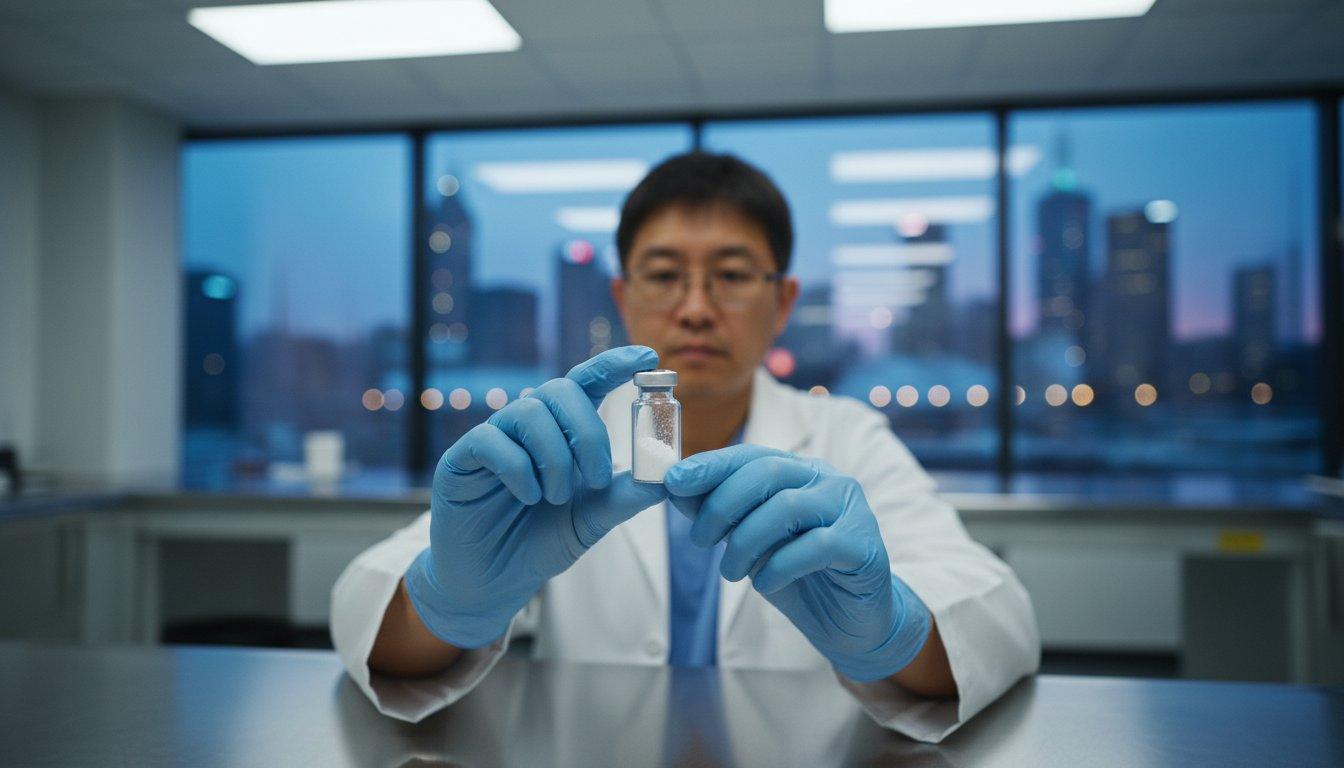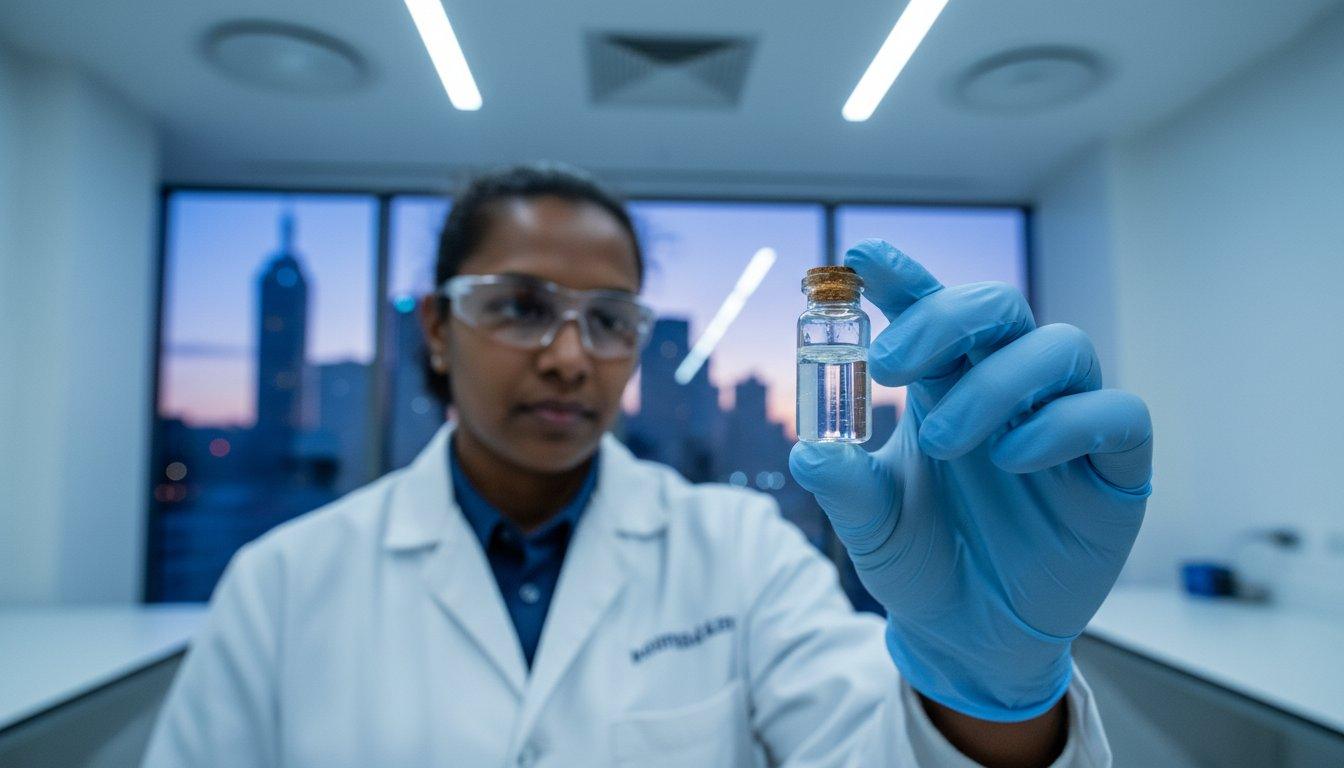
Best Peptides for Fat Loss Research 2026: A Comparative Guide
Why are 68% of metabolic studies still struggling to differentiate between simple appetite suppression and genuine cellular lipolysis? You’ve likely...
 Are you over 18 years old?
This website requires you to be 18 years or older to enter our website and see the content.
Are you over 18 years old?
This website requires you to be 18 years or older to enter our website and see the content.

The global peptide synthesis market is projected to reach $6.74 billion in 2026, yet the success of your study still hinges on the integrity of a single digital file. You’ve likely felt that familiar sting of uncertainty when reviewing a Certificate of Analysis, wondering if the data reflects the actual vial in your hand. Learning how to verify a peptide supplier’s claims is no longer just a best practice; it’s a fundamental requirement for protecting your research budget and data integrity. At Peak Haven, we understand that your work represents a significant investment of time and professional hope. We’re here to act as your steady hand in this complex system, ensuring you have the tools to source high-purity compounds like Retatrutide 20mg with absolute certainty.
We agree that the shift toward a 99%+ purity standard in 2026 has made the sourcing process more demanding than ever. This guide promises to empower you with a professional audit framework, moving beyond surface-level promises to technical verification. You’ll gain a clear checklist for cross-referencing third-party HPLC reports, understanding the impact of the 2026 FDA peptide reclassification, and leveraging Australian-based shipping to maintain cold-chain integrity. We’ll walk through the specific steps to transform your procurement process into a collaborative journey toward reliable, peer-reviewed results.
Peptide verification is a multi-step journey that validates the identity, purity, and concentration of your laboratory reagents. In May 2026, the global peptide synthesis market has reached a projected valuation of $6.74 billion, yet this growth has attracted market bad actors who compromise quality for profit. Recent global supplier shutdowns have left many laboratories vulnerable to low-quality batches, making it essential to understand how to verify a peptide supplier’s claims before committing your budget. At Peak Haven, we view ourselves as your steady hand in this complex system, ensuring you have the choice and control needed to protect your research data. We believe that transparency isn’t just a corporate policy; it’s a core promise that empowers you to reach your highest potential in the lab.
To better understand the practical steps of this process, watch this helpful video on identifying quality reagents:
In 2026, the accepted purity baseline for research peptides shifted from 98% to a minimum of 99%+. This percentage represents the ratio of the target peptide to all other substances in the vial. During the process of Chemical peptide synthesis, errors can occur, leading to truncated sequences or deletion sequences that mirror the target peptide but lack its functional integrity. High-Performance Liquid Chromatography (HPLC) purity serves as your primary metric for chemical cleanliness, ensuring that your Retatrutide 20mg or other compounds are free from these synthesis byproducts.
Using unverified reagents introduces significant risks to your study’s reproducibility. Impurities can trigger off-target effects in cellular models, leading to data that is impossible to replicate or publish in peer-reviewed journals. This doesn’t just waste your budget; it stalls the progress of your scientific journey. Sourcing pharmaceutical-grade peptides like our BPC-157 + TB-500 blend through a verified audit process ensures that your findings remain credible. By mastering how to verify a peptide supplier’s claims, you eliminate the uncertainty that often clouds digital procurement, allowing you to focus on the breakthroughs that matter most to the Australian scientific community.
A technical audit is your most reliable shield against compromised research data. While many vendors display high purity percentages, mastering how to verify a peptide supplier’s claims requires looking past the headline figures to the underlying data. In the 2026 research environment, a legitimate Certificate of Analysis (COA) must include both High-Performance Liquid Chromatography (HPLC) and Mass Spectrometry (MS). These two tests perform distinct but equally vital roles. HPLC measures the “cleanliness” of the sample, while MS confirms the molecule’s identity. Without both, you’re essentially flying blind, risking the integrity of your study on incomplete information.
To ensure your laboratory results are reproducible, you must distinguish between purity and identity. HPLC identifies the ratio of your target peptide to impurities; on a chromatogram, you’re looking for one sharp, dominant peak. Excessive “noise” or secondary peaks indicate a lack of chemical cleanliness. Conversely, Mass Spectrometry measures the molecular mass to prove the sequence is correct. For a complex compound like Retatrutide 20mg, identity confirmation is non-negotiable. At Peak Haven, we ensure every batch of HPLC tested peptides Australia undergoes this dual-verification process to protect your research journey.
It’s also essential to understand “Net Peptide Content.” This value is rarely 100%, even in the highest quality samples. A vial typically contains moisture and counter-ions like acetate or trifluoroacetate (TFA) used during the stabilization process. A net peptide content of 75% to 85% is standard for lyophilized powders. For sensitive in-vitro applications, you should also request Endotoxin and Heavy Metal testing. These tests ensure that trace contaminants won’t trigger inflammatory responses or toxicity that could skew your experimental observations.
The most common gap in procurement is failing to verify the digital document itself. To truly understand how to verify a peptide supplier’s claims, you must contact the testing laboratory directly. Independent third-party labs like Janoshik provide a unique report ID on every COA. You can enter this ID on the lab’s official website to confirm the results haven’t been altered or “borrowed” from another batch. Redacted lab names, missing dates, or reports older than six months are significant red flags. We encourage you to take this extra step of digital verification, as it builds the transparency necessary for a successful scientific partnership. If you’re looking for a steady hand in sourcing, we invite you to explore our verified research range today.

Technical data provides the foundation of trust, but the operational habits of a supplier reveal their long-term reliability and integrity. When you’re determining how to verify a peptide supplier’s claims, you must look beyond the lab report to the way the business positions itself within the Australian regulatory environment. Legitimate providers act as professional allies, prioritizing transparency and accountability in every shipment. These operational signals are often the final piece of the puzzle that separates a dedicated research partner from a transient vendor.
A primary indicator of a supplier’s legitimacy is their strict adherence to “Research Use Only” (RUO) protocols. Professional suppliers never make medical claims or suggest human consumption; instead, they focus entirely on scientific utility and laboratory applications. This compliant, science-first positioning is a core promise at Peak Haven. It ensures that our focus remains on providing the high-purity reagents needed for your studies, such as Retatrutide 20mg or Bacteriostatic Water. When a supplier offers medical consultations or dosage advice, they’re operating outside the standard research framework, which often signals a lack of professional oversight and business stability.
Choosing a local partner is a strategic decision that protects your research budget from the “customs lottery.” International shipments often face delays, seizures, or, more critically, temperature fluctuations that can degrade sensitive lyophilized powders. By choosing to buy peptides Australia from a domestic source, you ensure your materials benefit from Australia-wide express shipping. This significantly reduces transit time, which is vital for maintaining the cold-chain integrity required for complex compounds.
Local logistics also provide a level of accountability that international vendors cannot match. If you have a technical inquiry regarding a batch of MOTS-C 10mg, having access to responsive, Australian-based support ensures your questions are answered within your time zone. Secure payment methods, including credit cards and established digital options, further reinforce this trust. These systems provide a paper trail and buyer protection that are often absent with unverified global vendors. If you’re ready to secure your laboratory supplies from a partner that values your research goals as much as you do, we invite you to view our full research range today.
Protecting your research requires a shift from passive trust to active verification. By following a structured audit, you ensure that every reagent entering your laboratory meets the 99%+ purity standard established in May 2026. This protocol provides a clear path for anyone learning how to verify a peptide supplier’s claims, turning uncertainty into a repeatable, professional process. We’re here to act as your steady hand, ensuring your journey toward scientific discovery is built on a foundation of integrity.
For high-volume studies, batch-to-batch consistency is the bedrock of reproducible data. We recommend keeping a detailed log of every batch number and its corresponding HPLC chromatogram. This practice allows you to identify any subtle shifts in synthesis quality over time. If you’re managing complex study designs, protocols like The Peak Protocol can help streamline your research setup by providing a consistent supply of verified compounds. Once verified, always store your lyophilized powders in a stable, climate-controlled environment to prevent degradation.
Mastering how to verify a peptide supplier’s claims is not a one-time check; it’s an ongoing commitment to excellence. As the 2026 regulatory landscape continues to evolve, your ability to audit suppliers will remain your greatest asset in protecting your research integrity. Peak Haven stands as a dedicated ally in the Australian biotechnology sector, offering the transparency and local accountability you need to succeed. Our commitment to third-party testing and domestic logistics is designed to empower your work and help you reach your highest potential. We invite you to explore our range of HPLC-verified peptides at Peak Haven and take the next step in your scientific journey with confidence.
Your scientific journey deserves reagents that meet the highest standards of integrity. By mastering how to verify a peptide supplier’s claims, you ensure your data remains reproducible and your budget is protected. You now have the tools to audit technical lab reports and recognize the operational trust signals that define a professional partner. At Peak Haven, we’re dedicated to acting as your steady hand in this process. We provide third-party HPLC purity testing on every batch to ensure you receive only 99%+ pure compounds. Our commitment to the Australian research community includes Australia-wide express shipping from our local facilities, ensuring your cold-chain integrity is never compromised. We maintain a strict laboratory-use focus with no medical claims, ensuring your study stays compliant and professional. We’re here to help you achieve your highest potential in the lab.
Secure your high-purity research compounds at Peak Haven today
We’re excited to support your next breakthrough with the reliability and transparency you deserve. Your progress is our priority, and we look forward to being a trusted part of your scientific successes.
Yes, unethical suppliers can alter digital files or use reports from 2024 for current 2026 batches. To combat this, always look for a unique QR code or report ID that links directly to the testing facility’s database. Verifying the document’s authenticity is the first step in learning how to verify a peptide supplier’s claims. If a supplier refuses to provide a verifiable link, it’s best to look elsewhere for your reagents.
HPLC purity measures the ratio of your target peptide against other peptide impurities, aiming for the 99%+ standard established in 2026. Net Peptide Content is different; it represents the actual weight of the peptide molecule in the lyophilized powder. Because vials contain moisture and counter-ions like acetate, the net content is usually 75% to 85%. This distinction is vital for calculating precise molar concentrations in your laboratory experiments.
Third-party testing removes the conflict of interest that exists when a supplier tests their own products. Independent laboratories provide an unbiased technical audit that ensures the purity and identity of the compound are accurately reported. At Peak Haven, we believe this transparency is a core promise to our researchers. It provides the steady hand you need to ensure your budget is spent on verified, high-purity compounds.
The “Research Use Only” (RUO) label is a hallmark of a professional, compliant supplier rather than a sign of low quality. It indicates that the peptide is a high-purity reagent synthesized specifically for in-vitro or laboratory studies. Legitimate providers use this framing to adhere to Australian regulatory standards. If you see a supplier making medical claims, it’s a sign they’re operating outside professional scientific frameworks.
Most reputable overseas labs provide an online verification portal where you can enter the unique report ID found on the COA. This allows you to cross-reference the digital file provided by the supplier with the original data held by the lab. This step is a critical part of knowing how to verify a peptide supplier’s claims. It prevents the use of “borrowed” or altered reports that could compromise your research data.
Major red flags include medical dosage instructions, claims of human health benefits, and the absence of batch-specific HPLC reports. A lack of Australian-based shipping is another concern, as it increases the risk of customs seizures or product degradation. Legitimate sites focus on chemical specifications and provide clear, local contact details. If a website looks like a pharmacy rather than a laboratory supplier, it’s a significant warning sign.

The products discussed in this article are intended strictly for laboratory and research purposes only. They are not intended for human consumption, therapeutic use, or as dietary supplements. Nothing in this article should be interpreted as medical advice, a diagnosis, or a recommendation for treatment. Always consult a qualified healthcare professional for any medical concerns.
Peak Haven supplies research-grade peptides exclusively for scientific and clinical research use. All products undergo independent third-party HPLC testing to verify purity and composition. By purchasing from Peak Haven, you confirm that products will be used solely for legitimate research purposes in accordance with all applicable Australian laws and regulations.
The information presented in this article is based on published scientific literature and is provided for educational purposes only. Peak Haven makes no claims regarding the efficacy or safety of any compound for human use. Individual research results may vary. References to studies or research findings do not constitute endorsement of any specific application.
 by
by