Best Peptides for Fat Loss Research 2026: A Comparative Guide
Why are 68% of metabolic studies still struggling to differentiate between simple appetite suppression and genuine cellular lipolysis? You’ve likely...
 Are you over 18 years old?
This website requires you to be 18 years or older to enter our website and see the content.
Are you over 18 years old?
This website requires you to be 18 years or older to enter our website and see the content.

What if the most powerful tool for resetting the genetic clock of dermal tissue is a 1973 discovery that modulates over 4,192 human genes? You’ve likely experienced the difficulty of sourcing high-purity 100mg vials for ghk-cu for skin aging research, especially when worrying about peptide stability during the transit to Australia. We understand that these logistical hurdles can feel overwhelming when you’re focused on scientific progress. At Peak Haven, we’re dedicated to acting as your reliable ally, ensuring you have the high-quality materials and clear protocols needed for success.
This scientific overview will help you master the mechanisms of gene expression and establish a standard laboratory protocol for your dermal assays. We’ll explore the latest 2026 data on collagen synthesis and provide a clear guide for reconstitution to protect your research peptides Australia. You’ll also learn how to secure HPLC tested peptides Australia that meet the highest standards of purity. Our goal is to empower your work by providing a steady hand and professional expertise throughout your research journey.
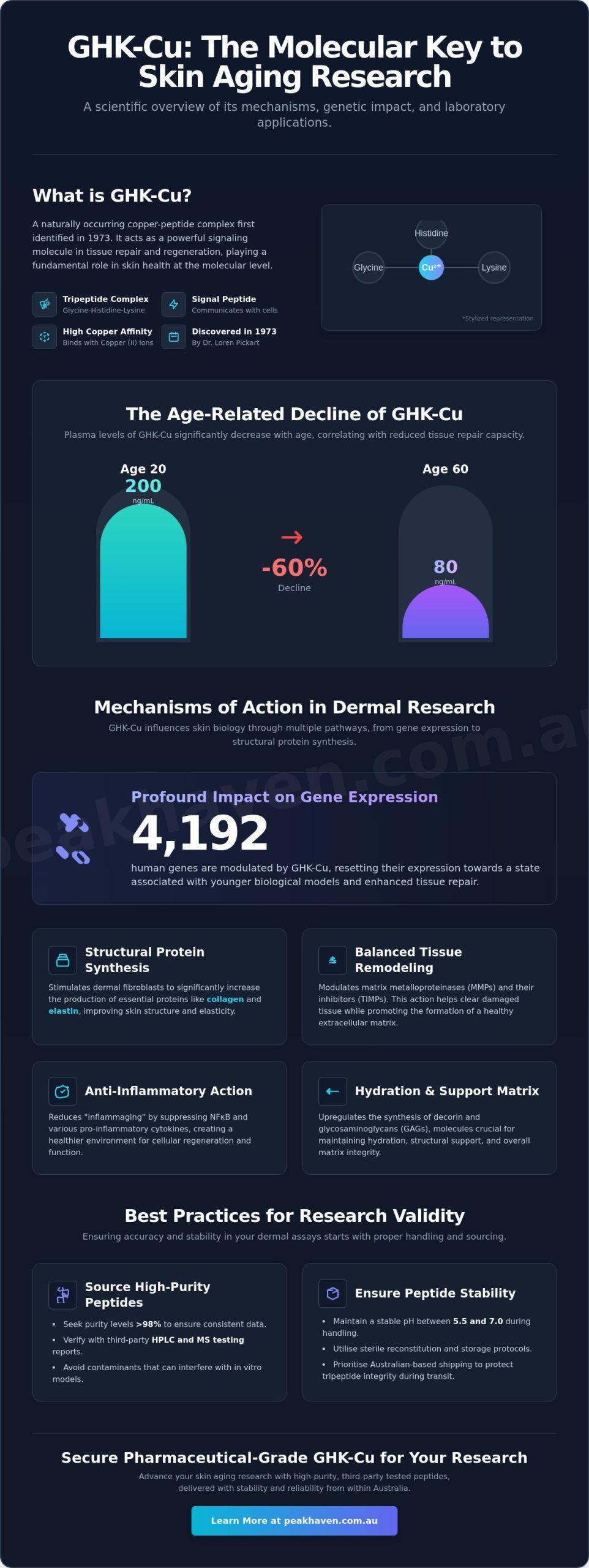
GHK-Cu is a small, naturally occurring protein fragment found in human plasma that consists of three amino acids: glycine, histidine, and lysine. Researchers often refer to it as the Copper peptide GHK-Cu because of its unique and powerful ability to bind with copper (II) ions. Dr. Loren Pickart first identified this molecule in 1973 while investigating the biological differences between young and old liver tissue. This discovery opened new doors for ghk-cu for skin aging research, as it highlighted how specific molecules might support tissue repair and cellular health at a fundamental level.
To better understand this concept, watch this helpful video:
The peptide acts as a vital “signal peptide” in dermal fibroblast research. It communicates with cells to stimulate the production of essential proteins like collagen and elastin. Copper ions are necessary for this process because they activate enzymes such as lysyl oxidase, which is required for proper collagen cross-linking. Without this interaction, the structural integrity of the dermal matrix would be difficult to maintain in laboratory models.
The tripeptide sequence has an exceptionally high affinity for copper, forming a stable complex that survives in various environments. In a laboratory setting, maintaining a stable pH, typically between 5.5 and 7.0, is essential to prevent the complex from breaking down. When you buy GHK-Cu 100mg for your laboratory, purity is the most important variable. High-purity peptides, often exceeding 98% as verified by HPLC testing, ensure that in vitro models yield consistent data without interference from residual solvents or uncoupled amino acids.
Natural levels of GHK-Cu in the body don’t stay constant over time. Research shows that plasma concentrations drop by approximately 60% as we age. A 20-year-old typically has around 200 nanograms per millilitre, while a 60-year-old may have only 80 nanograms per millilitre. This decline provides a clear variable for scientists using ghk-cu for skin aging research to model how synthetic replenishment might influence tissue rejuvenation. By studying these interactions, researchers can better understand the pathways that drive cellular vitality and structural integrity in Australian laboratory settings.
The biological activity of GHK-Cu stems from its ability to act as a signal peptide, communicating directly with dermal fibroblasts to stimulate the synthesis of essential structural proteins. When researchers study ghk-cu for skin aging research, they focus on how it increases the production of collagen and elastin. These proteins are the building blocks of skin elasticity. Beyond simple synthesis, the peptide plays a critical role in tissue remodelling by modulating matrix metalloproteinases (MMPs) and their inhibitors, known as TIMPs. This delicate balance ensures that damaged tissue is cleared while new, healthy matrix components are deposited.
The peptide also upregulates decorin and glycosaminoglycans (GAGs) within the extracellular matrix. These molecules are vital for maintaining hydration and structural support. From an anti-inflammatory perspective, GHK-Cu suppresses NF?B and various pro-inflammatory cytokines. This reduction in “inflammaging” is a key area of interest for Australian laboratories. At Peak Haven, we provide pharmaceutical grade GHK-Cu that is third-party HPLC tested to ensure the highest purity for these sensitive assays.
One of the most remarkable findings in ghk-cu for skin aging research is its impact on the human genome. Data indicates that GHK-Cu affects 4,192 human genes, shifting their expression toward a state typically associated with younger biological models. This “resetting” of DNA helps explain its effectiveness in regenerative medicine studies. As detailed in the Regenerative and Protective Actions of GHK-Cu, the peptide influences gene pathways related to chronic wound healing and cellular repair. Researchers use these findings to explore how the peptide might reverse age-related cellular decline in laboratory environments.
GHK-Cu provides a robust defense against oxidative stress. It activates superoxide dismutase (SOD), an enzyme that neutralises harmful free radicals. In various laboratory assays, the peptide effectively blocks iron-induced lipid peroxidation, which is a major driver of cellular damage. In vitro studies also show that GHK-Cu protects keratinocytes from UV-induced damage, suggesting a protective role against environmental stressors. This multifaceted protection makes it a cornerstone of modern research. We invite you to explore our range of HPLC tested peptides Australia wide to support your next scientific breakthrough.
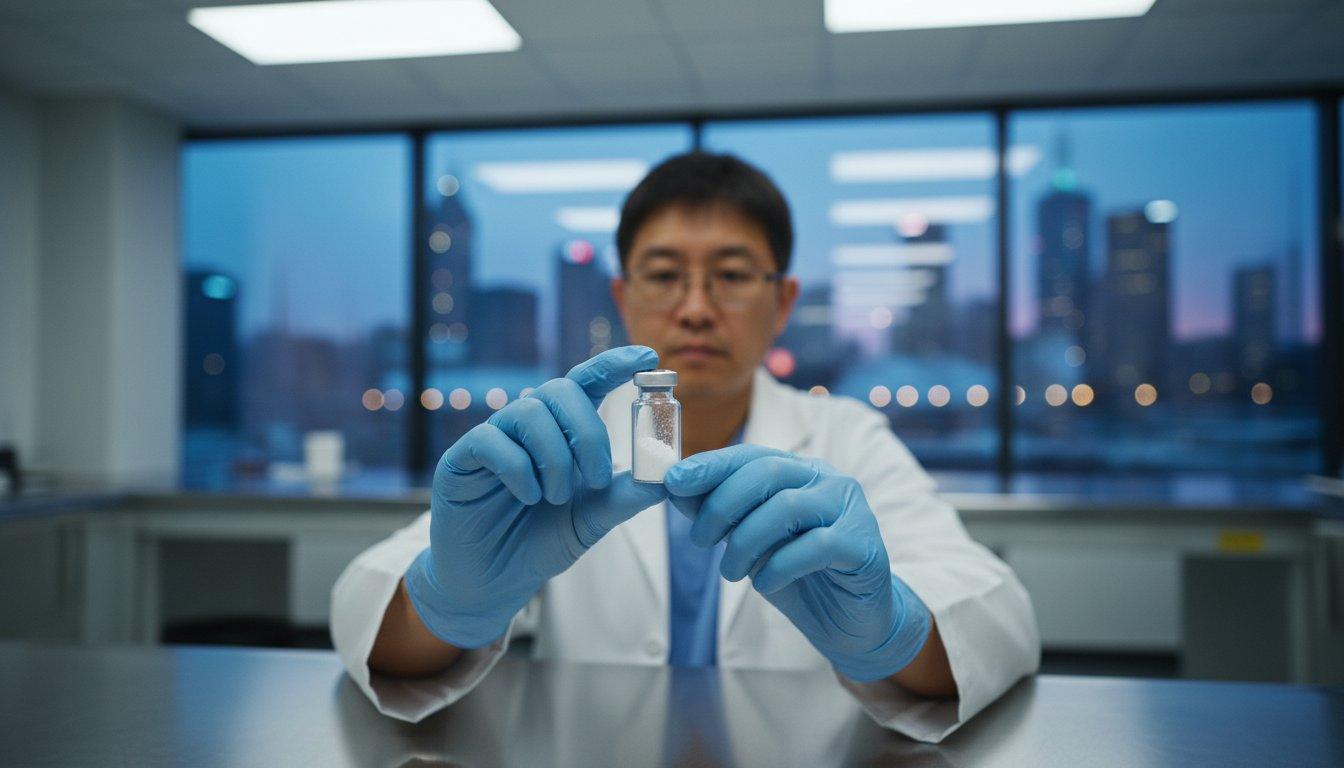
Achieving consistent results in ghk-cu for skin aging research depends on rigorous laboratory protocols. Precision is key. Researchers must handle GHK-Cu 100mg vials with care to preserve the peptide’s delicate molecular structure. Peak Haven ensures every vial arrives via a secure cold chain, maintaining stability from our Australian dispatch centre to your laboratory freezer. Once received, storing lyophilised powder at -20°C prevents premature degradation, while reconstituted solutions require constant refrigeration at 2°C to 8°C.
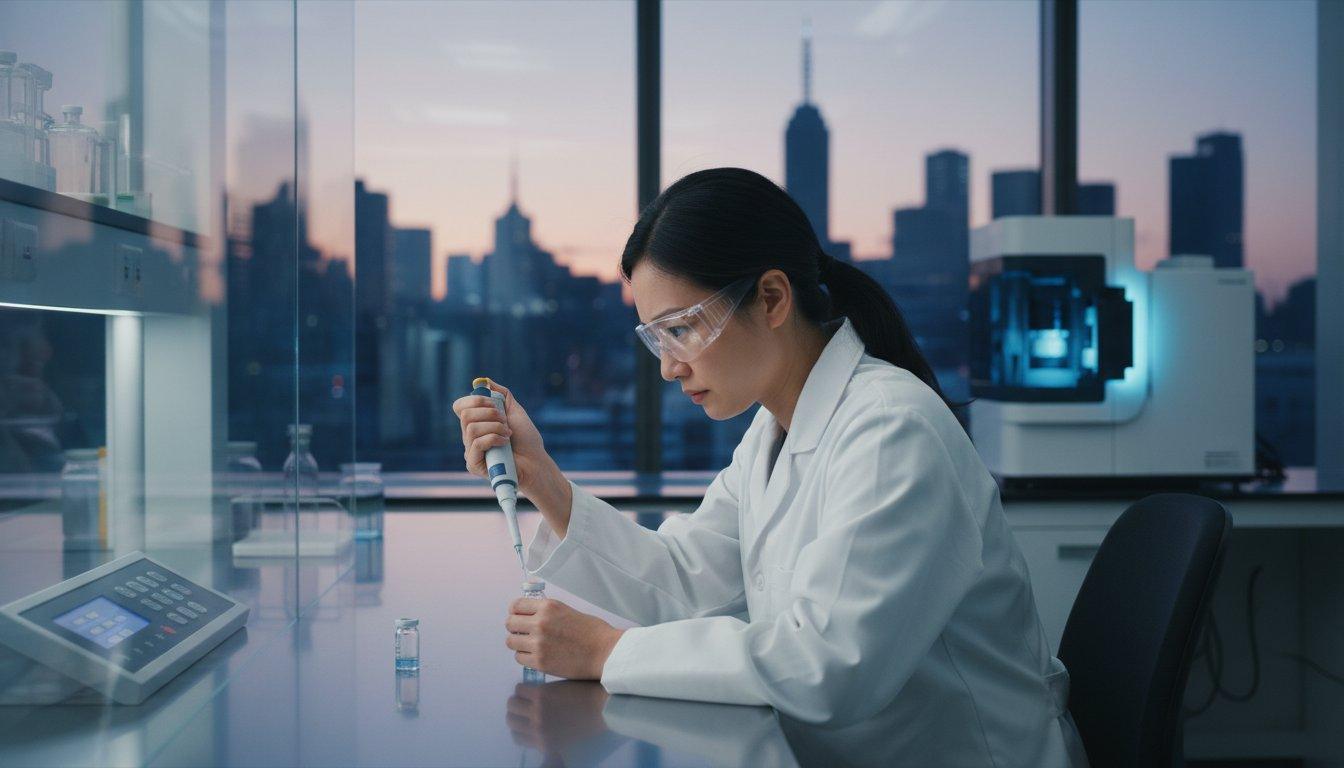
Maintaining a sterile environment during every stage of handling protects the integrity of your data. Contaminants can quickly compromise a study, so work should always occur within a laminar flow hood or a similarly controlled setting. A comprehensive GHK-Cu Peptide Research Review highlights that this tripeptide is sensitive to oxidation; therefore, researchers should use amber vials or keep samples in complete darkness to avoid light-induced breakdown. It’s essential to use high-purity materials to ensure the research remains focused on the peptide’s cellular interactions rather than external variables.
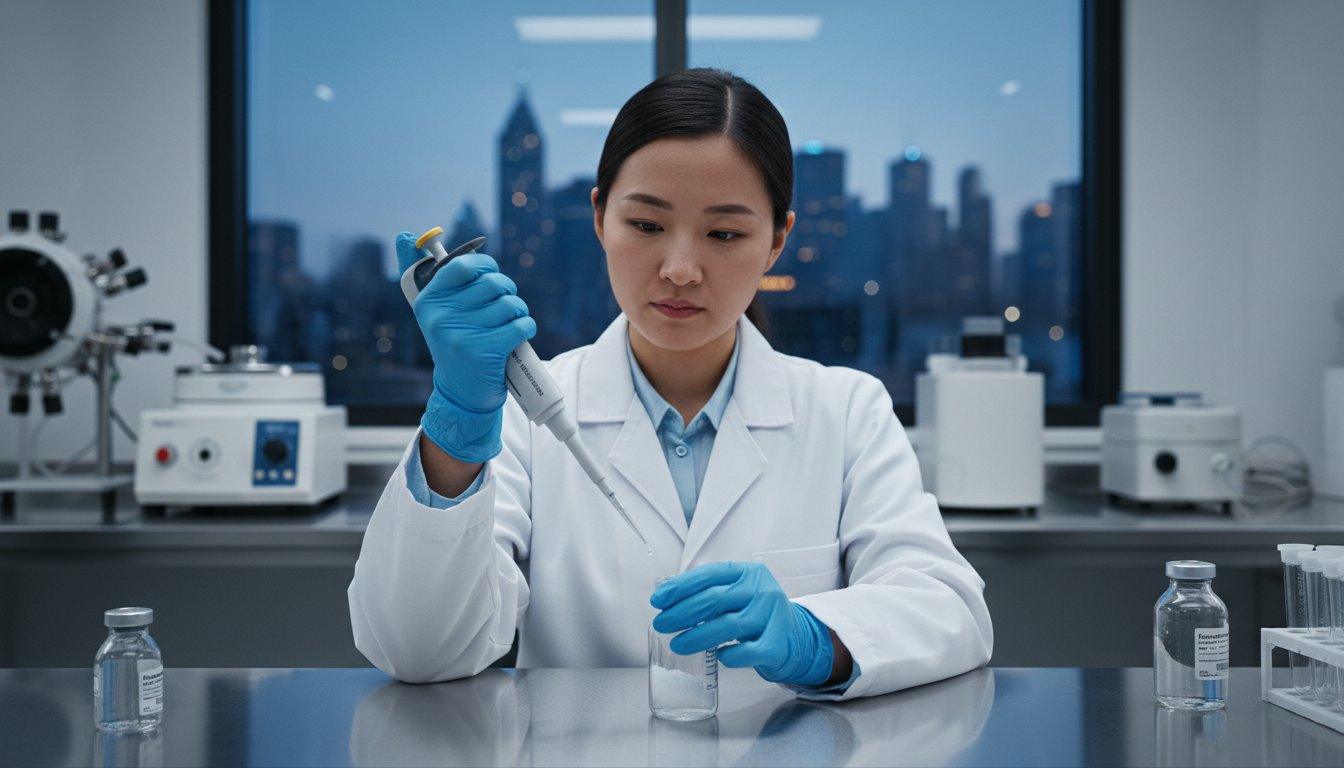
Mixing the lyophilised powder requires bacteriostatic water to inhibit microbial growth over the duration of the study. For a standard 100mg vial, adding 5mL of diluent creates a concentration of 20mg/mL. Always aim the water at the side of the glass vial, letting it trickle down slowly. Swirl the vial gently instead of shaking, as vigorous movement can disrupt the peptide bonds and lead to denaturation. Consistent concentration levels are vital for calculating precise dosages in ghk-cu for skin aging research.
Stability is the cornerstone of reliable longitudinal studies. While lyophilised peptides remain stable for up to 24 months when frozen, reconstituted GHK-Cu has a much shorter shelf life, typically around 4 to 8 weeks. HPLC-tested peptides from Peak Haven provide a high purity baseline, but environmental factors like temperature fluctuations can still trigger degradation. We recommend aliquotting the solution into smaller, single-use volumes immediately after reconstitution. This practice prevents the need for repeated freeze-thaw cycles, ensuring each test sample maintains the exact chemical profile required for accurate data collection.
Advance your laboratory findings with high-purity materials. Explore our range of HPLC-tested GHK-Cu 100mg vials today.
Securing high-quality compounds for laboratory studies requires a partner who understands the delicate nature of peptide stability. In 2026, the Australian regulatory landscape remains clear; these materials are strictly for laboratory research use. Peak Haven serves as a steady hand for researchers, providing pharmaceutical-grade supplies that meet the rigorous demands of modern science. When you source ghk-cu for skin aging research, the integrity of your data depends entirely on the purity of your starting material.
Local shipping is a vital factor in maintaining this integrity. Peptides are sensitive to temperature fluctuations and prolonged transit times. By shipping directly from within Australia, we eliminate the risks associated with international customs delays and unmonitored storage conditions. This ensures your research materials arrive with their molecular structure intact, ready for precise reconstitution. Researchers often find that ghk-cu for skin aging research yields more robust data when the supply chain is transparent and localized.
Distinguishing between cosmetic-grade and research-grade copper peptides is essential for valid outcomes. Cosmetic variants often contain stabilizers or lower concentrations unsuitable for controlled studies. A genuine Certificate of Analysis (CoA) should show a purity level exceeding 98% through High-Performance Liquid Chromatography (HPLC) and Mass Spectrometry (MS). Peak Haven utilises independent Australian laboratories to verify every batch, providing you with transparent, third-party data. You’ll want to look for a single, sharp peak on the HPLC chromatogram, which indicates the absence of significant degradation products or manufacturing byproducts.
Investigating synergistic effects can reveal new insights into dermal repair mechanisms. Many Australian models now explore the combination of GHK-Cu with other regenerative compounds. For instance, researchers are examining the synergy between GHK-Cu and GLOW70 to understand how multiple peptide pathways interact during collagen synthesis. Others focus on tissue repair by layering GHK-Cu with systemic repair models like the BPC-157 and TB-500 blend. These stacks allow for a more comprehensive analysis of cellular signalling and extracellular matrix modulation.
We’re here to support your journey toward scientific discovery with reliable, verified materials. Explore our full range of research peptides Australia to find the precise tools your laboratory requires for its next breakthrough.
Exploring ghk-cu for skin aging research requires a precise understanding of its copper-binding affinity and its role in modulating gene expression within the dermal matrix. Studies published through 2025 highlight its capacity to stimulate collagen and elastin production at a cellular level, making it a cornerstone for modern laboratory investigations. Maintaining rigorous storage and reconstitution protocols is essential to preserve the peptide’s structural integrity throughout your study. When you’re ready to move forward, sourcing high-purity reagents is the most critical step for reliable data.
Peak Haven supports the Australian scientific community by providing HPLC-tested peptides Australia wide. Our 100mg vials undergo third-party purity verification to ensure your results remain consistent and reproducible. We offer express Australia-wide shipping and secure payment options, including credit cards and cryptocurrency, to keep your laboratory timeline on track. You can order HPLC-tested GHK-Cu 100mg for your research today and explore our full range of laboratory supplies at peakhaven.com.au. We’re here to help you reach the next peak in your scientific journey.
GHK-Cu is legal for purchase and use in laboratory research within Australia. Under current TGA guidelines, it’s classified for research purposes and isn’t intended for human consumption or therapeutic use. When you buy GHK-Cu Australia, ensure your laboratory protocols comply with local biosafety standards. Peak Haven supports your journey by providing pharmaceutical grade peptides specifically for in vitro studies conducted in controlled environments across the country.
Researchers typically use concentrations between 1 nanomolar and 10 nanomolar to stimulate collagen synthesis in fibroblast cultures. Pickart’s 2015 study demonstrated that a 1 nanomolar concentration significantly increases the expression of collagen type I. Higher concentrations exceeding 100 nanomolar might lead to receptor saturation in certain cell lines. It’s essential to calibrate your specific ghk-cu for skin aging research based on the metabolic activity of your primary human dermal fibroblast samples.
GHK-Cu focuses primarily on remodeling the extracellular matrix and copper modulation, while BPC-157 targets the angiogenic pathway and growth factor expression. Research peptides Australia studies often stack these to observe synergistic effects on dermal wound healing. While GHK-Cu increases glycosaminoglycan production by 300 percent, BPC-157 is often cited for its role in upregulating VEGFR2 expression. Both serve distinct but complementary roles in tissue regeneration and laboratory-based repair models.
You can use sterile 0.9 percent sodium chloride for immediate use, but bacteriostatic water is preferred for multi-dose research vials. Saline lacks the 0.9 percent benzyl alcohol preservative, which limits the shelf life of the solution to approximately 24 hours under refrigeration. For long-term ghk-cu for skin aging research, bacteriostatic water ensures the integrity of the peptide remains stable for up to 28 days at 4 degrees Celsius.
A visible shift from the characteristic deep blue hue to a pale tint indicates copper dissociation and peptide oxidation. HPLC testing shows that GHK-Cu maintains 99 percent purity for up to 18 months when stored as a lyophilized powder at -20 degrees Celsius. Exposure to UV light or temperatures above 25 degrees Celsius for over 72 hours leads to peptide fragmentation. Researchers should monitor solution clarity and pH levels to ensure experimental consistency.
Peak Haven provides comprehensive third-party HPLC and MS testing results for every batch of GHK-Cu 100mg to verify purity levels exceed 99 percent. These reports are accessible to all researchers to ensure they’re working with HPLC tested peptides Australia that meet strict quality benchmarks. Our commitment to transparency helps Australian laboratories maintain rigorous standards. We also offer reliable Australian-based shipping to ensure your supplies arrive safely for your next project.
Explore the full range of GHK-Cu and other research peptides at peakhaven.com.au.

The products discussed in this article are intended strictly for laboratory and research purposes only. They are not intended for human consumption, therapeutic use, or as dietary supplements. Nothing in this article should be interpreted as medical advice, a diagnosis, or a recommendation for treatment. Always consult a qualified healthcare professional for any medical concerns.
Peak Haven supplies research-grade peptides exclusively for scientific and clinical research use. All products undergo independent third-party HPLC testing to verify purity and composition. By purchasing from Peak Haven, you confirm that products will be used solely for legitimate research purposes in accordance with all applicable Australian laws and regulations.
The information presented in this article is based on published scientific literature and is provided for educational purposes only. Peak Haven makes no claims regarding the efficacy or safety of any compound for human use. Individual research results may vary. References to studies or research findings do not constitute endorsement of any specific application.
 by
by