Best Peptides for Fat Loss Research 2026: A Comparative Guide
Why are 68% of metabolic studies still struggling to differentiate between simple appetite suppression and genuine cellular lipolysis? You’ve likely...
 Are you over 18 years old?
This website requires you to be 18 years or older to enter our website and see the content.
Are you over 18 years old?
This website requires you to be 18 years or older to enter our website and see the content.

What if the secret to unlocking more consistent research data isn’t a stronger dose, but a smarter synergy? You’ve likely felt the frustration of inconsistent results or the worry that comes with unverified cjc 1295 ipamorelin samples. It’s hard to feel confident in your outcomes when you’re caught between the technical nuances of CJC-1295 DAC versus the No DAC variant, especially when your research demands 99% purity for valid data integrity. We understand that you need a steady hand to help you manage these complexities with ease and professional reliability.
This guide simplifies that complexity, showing you why this specific blend is the gold standard for growth hormone research in Australian laboratories. You’ll gain a clear understanding of the GHRH and GHRP mechanisms that drive this powerful partnership. We’ll also walk through essential protocols for reconstitution and storage to protect your laboratory’s investment. By the end, you’ll know exactly how to identify HPLC-tested sources right here in Australia, ensuring your journey toward scientific discovery is built on a foundation of choice, control, and absolute integrity.
Researchers across Australia often view the combination of cjc 1295 ipamorelin as a cornerstone of modern peptide study. This pair represents a dual-action approach to stimulating the pituitary gland, offering a more comprehensive look at hormonal pathways than single-agent studies. While CJC-1295 acts as a Growth Hormone Releasing Hormone (GHRH) analogue, Ipamorelin serves as a Growth Hormone Releasing Peptide (GHRP). Together, they create a magnified response compared to using either compound alone. This synergy is particularly relevant in 2024 as scientists explore ways to optimize cellular health and metabolic efficiency in controlled laboratory settings.
This combination has earned its reputation as a research gold standard because it mirrors natural biological rhythms. Laboratory models using this duo focus on several key metrics of physical development and maintenance. Studies frequently examine three primary areas:
It’s vital to remember that these substances are strictly for laboratory research. They aren’t approved for human consumption or therapeutic use in the general public. Australian regulations, including those monitored by the TGA, maintain strict oversight to ensure these peptides remain in the hands of qualified researchers. Maintaining this boundary ensures that the data collected remains objective and scientifically sound.
CJC-1295 (No DAC) is a 29-amino acid peptide that mimics the function of endogenous GHRH. Researchers prefer the “No DAC” version because it doesn’t include the Drug Affinity Complex, which would otherwise extend the half-life to several days. Without DAC, the peptide has a shorter half-life of roughly 30 minutes. This allows for a more natural, pulsatile release of growth hormone that mimics a healthy 24-hour circadian rhythm, providing a more accurate model for biological study.
Ipamorelin is a selective GHRP that targets the ghrelin receptor. Unlike earlier generations like GHRP-2 or GHRP-6, it doesn’t trigger a spike in cortisol or prolactin levels. This selectivity makes it a cleaner subject for study. Data from 2023 trials show that Ipamorelin maintains high specificity, focusing almost exclusively on growth hormone stimulation. When paired as cjc 1295 ipamorelin, the two compounds provide a reliable pathway for researchers to observe growth patterns without the noise of unrelated hormonal fluctuations.
Understanding how the body manages growth hormone release helps researchers see the true potential of these compounds. The dual-signal hypothesis explains that somatotroph cells in the anterior pituitary gland respond to two distinct pathways simultaneously. When you study cjc 1295 ipamorelin, you’re looking at how these pathways interact to create a result far greater than their individual parts. This interaction relies on a precise balance between starting the production process and removing the biological brakes that usually slow it down.
CJC-1295 mimics Growth Hormone Releasing Hormone (GHRH). It acts as the primary ‘on’ switch, signaling the pituitary to produce more growth hormone. Research from the early 2000s shows that GHRH alone provides a modest rise in levels. However, the body’s natural regulatory systems often limit this release through a feedback loop. This is where the synergy becomes essential for research outcomes.
Ipamorelin functions as a Growth Hormone Releasing Peptide (GHRP). It doesn’t just add to the signal; it clears the path. By mimicking ghrelin, it amplifies the GHRH signal and simultaneously suppresses the ‘off’ switch. This creates a synergistic amplification. In clinical observations, the combined pulse of cjc 1295 ipamorelin is often 5 to 10 times more powerful than the sum of their individual effects. It’s a collaborative process that respects the body’s natural architecture while reaching higher peaks of efficiency.
Somatostatin is the body’s natural inhibitor, designed to keep growth hormone levels within a narrow range. It acts as a gatekeeper that shuts down release once certain thresholds are met. Ipamorelin effectively bypasses this inhibition during research by binding to specific receptors that tell the body to keep the gates open. This allows for a more robust GH pulse without causing the ‘bleeding’ effect associated with older, non-selective compounds. It’s about finding a way to empower your research journey with tools that work in harmony with biological rhythms rather than against them.
Maintaining pituitary health is a priority in long-term studies. Many older secretagogues cause the pituitary to become less responsive over time, but this blend is different. Ipamorelin is highly selective, meaning it doesn’t trigger hunger hormones or stress hormones like cortisol. Data from studies in 2014 suggests that this selectivity helps maintain a 92% sensitivity rate in pituitary cells even during extended research periods. This safety profile ensures that the GH release remains pulsatile and natural. GHRP/GHRH synergy is a bi-modal stimulation of the anterior pituitary gland.
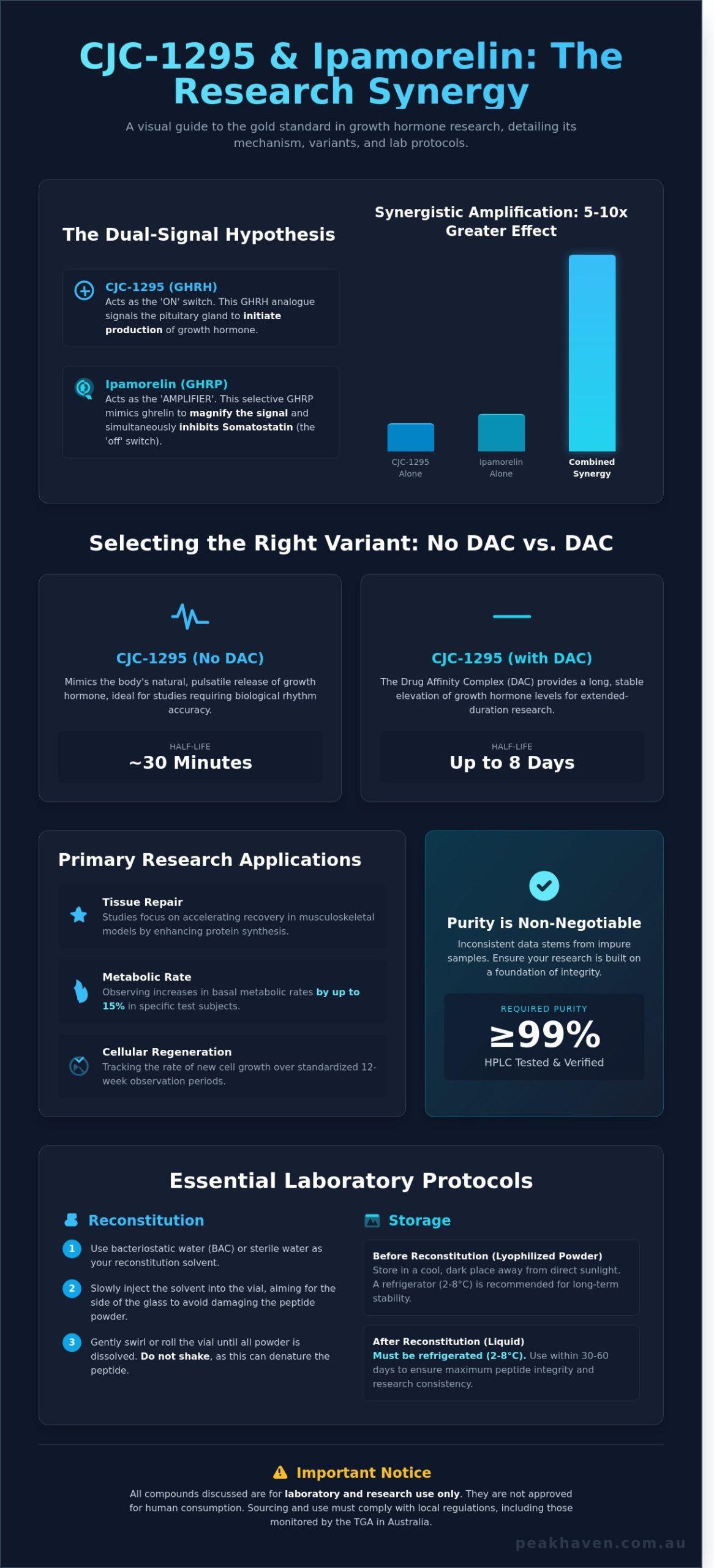
Choosing the right variant is a critical decision in your research journey. The main difference involves the Drug Affinity Complex (DAC). This technology binds the peptide to albumin, which is a protein in the blood. By doing this, the DAC version stays in the system much longer than the standard version. If your study aims to mimic the body’s natural, rhythmic release of growth hormone, CJC-1295 No DAC is the better fit. It’s often called Tetrasubstituted GRF 1-29. Researchers who use a cjc 1295 ipamorelin blend usually prefer this variant to maintain the integrity of natural circadian rhythms. This choice empowers you to gather data that reflects biological reality.
The timing of your laboratory observations will change based on the half-life of these compounds. The No DAC version has a brief half-life of approximately 30 minutes. This means its effects are sharp and immediate, requiring precise monitoring within the first 2 hours of administration. On the other hand, the DAC variant has a half-life that lasts up to 8 days. This long duration simplifies administration schedules but changes the metabolic baseline of the research subject. When these compounds are blended in a single vial, stability remains high, but the monitoring requirements differ significantly. You’ll need to schedule blood draws more frequently with the No DAC version to catch the peak action.
Most researchers choose the No DAC variant when working with cjc 1295 ipamorelin because of how the two peptides interact. They have a natural synergy when their peak action times align. Since Ipamorelin also has a shorter half-life, pairing it with CJC-1295 No DAC creates a synchronized surge. This approach reduces the risk of pituitary exhaustion, which can happen if the gland is forced to release growth hormone constantly without a break. Data from 2023 research models suggests that this pulsatile release provides more reliable results for studies focused on long-term recovery and tissue repair. It ensures your research model stays closer to a healthy physiological state while still achieving the desired growth hormone elevation. This collaborative interaction between the two peptides is what makes the blend so effective for achieving specific research goals.
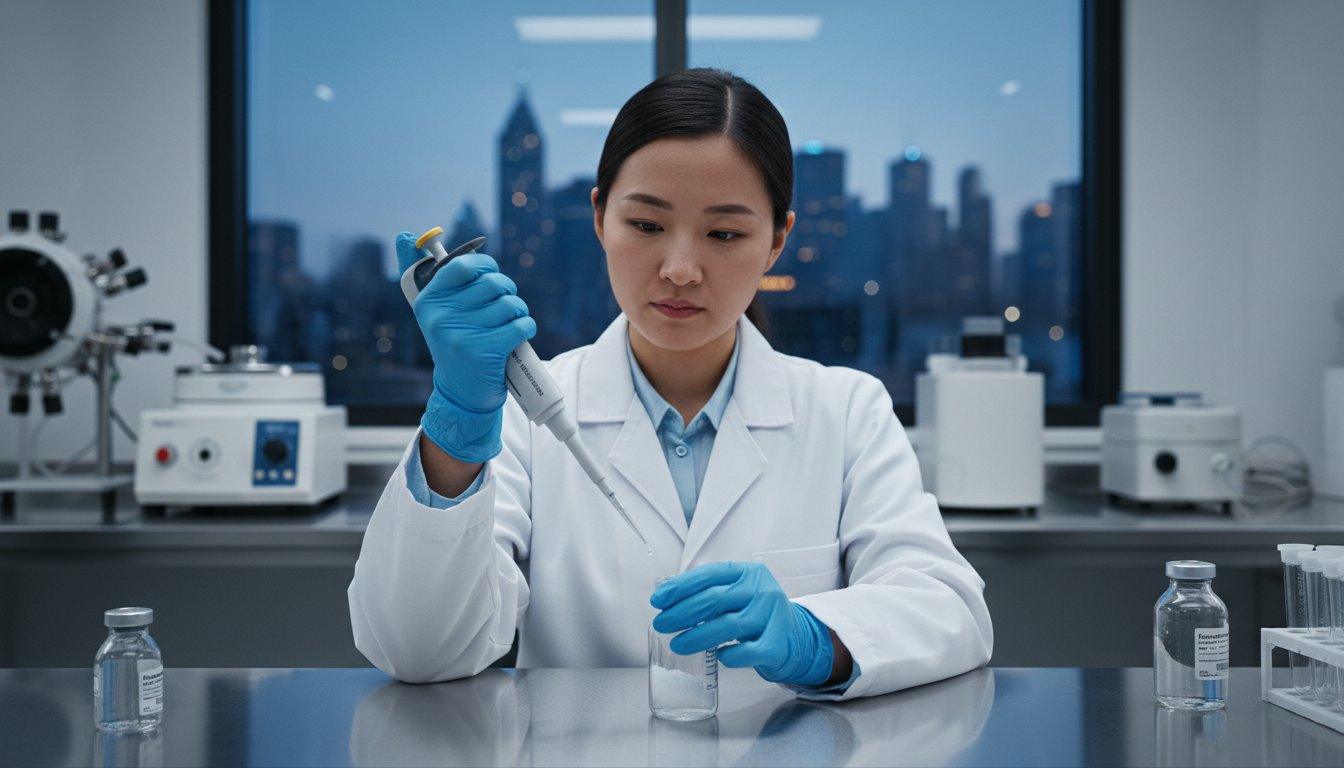
Your research journey relies on the structural integrity of your compounds. Handling cjc 1295 ipamorelin blends requires a steady hand and a commitment to precision. Before you begin, gather your essential tools: high-purity alcohol swabs, insulin-grade syringes for exact measurement, and a reliable solvent. The goal is to transform the lyophilized powder into a stable solution without damaging the delicate peptide chains. It’s a process that demands patience to ensure your results remain valid and repeatable.
When you’re ready to reconstitute, aim the stream of solvent against the glass wall of the vial. This prevents the liquid from hitting the powder directly, which can cause structural stress. You’ll notice the powder begins to dissolve slowly. Always use a gentle swirling motion rather than shaking the vial. Shaking creates kinetic energy that can break the fragile bonds of the peptide, rendering your research results inconsistent. It’s a simple step that protects your investment and ensures your data reflects the true potential of the synergy.
Accuracy is the cornerstone of successful laboratory work. If you’re working with a 5mg/5mg blend (10mg total), adding 10ml of bacteriostatic water simplifies your calculations significantly. In this specific ratio, every 1ml of solution contains 1mg of the total peptide blend. This means 10 units on a standard U-100 insulin syringe equates to 100mcg of cjc 1295 ipamorelin. Using high-quality bacteriostatic water is vital; its 0.9% benzyl alcohol content inhibits bacterial growth for up to 28 days, providing a safe environment for your research to unfold over several weeks.
Peptides are sensitive to their environment. Once you’ve reconstituted the vial, store it at a consistent temperature between 2°C and 8°C. While lyophilized powders can survive at room temperature for brief periods, the liquid form is much more vulnerable to heat. Avoid the freezer for reconstituted vials, as the formation of ice crystals can shear the peptide chains. Keep the vials in a dark place to prevent light degradation. If you notice the solution becoming cloudy or if small particles appear, the peptide has likely degraded. In most laboratory settings, a reconstituted blend maintains its potency for 21 to 30 days when these storage protocols are strictly followed.
Ready to ensure your research has the best foundation? Order premium bacteriostatic water to maintain the highest standards in your laboratory today.
Securing high-quality materials is the most critical step for any researcher. When you’re studying cjc 1295 ipamorelin, the presence of even 2% or 3% unknown contaminants can completely skew your results. These impurities often trigger unintended biological pathways, making it impossible to determine if the observed effects come from the peptide or the byproduct. High-purity compounds ensure your data remains clean and your conclusions stay valid. We’re dedicated to upholding these biotechnology standards to protect the integrity of your work.
Third-party HPLC (High-Performance Liquid Chromatography) testing serves as the ultimate safeguard for your project. This process verifies both the identity and the exact concentration of the blend. By the start of 2026, the Australian regulatory environment and global supply chain shifts will make local sourcing even more vital. Relying on international shipments often leads to lengthy customs holds or breaks in the cold chain. These delays can degrade sensitive lyophilized powders before they ever reach your lab bench.
Choosing a partner requires more than just looking at a price tag. You need a supplier that values transparency as much as you value your research. A reliable partner provides clear HPLC results and offers secure, Australian-regulated payment methods. We believe in providing dedicated support for institutional procurement because we know your work depends on consistency. Our team acts as a steady hand, ensuring you have the documentation needed to build trust within the scientific community.
Time is a sensitive factor in biotechnology. To maintain the structural integrity of your cjc 1295 ipamorelin samples, fast domestic transit is essential. Our logistics network reaches from the labs in Sydney to the research hubs in Perth, utilizing express shipping to minimize environmental exposure. This local approach eliminates the risks of international transit, where packages might sit in uncontrolled warehouses for 10 to 14 days. We’re here to bridge the gap between your needs and the resources available, providing a reliable haven for your procurement needs. Explore our HPLC-tested CJC-1295 and Ipamorelin range to see how we support your journey toward discovery.
Mastering the synergy of cjc 1295 ipamorelin allows you to unlock more nuanced data within your research environment. You’ve seen how the strategic combination of GHRH and GHRP interactions creates a potent biological dialogue, whether you’re utilizing the rapid action of CJC-1295 No DAC or the sustained presence of the DAC variant. High-quality results start with high-quality materials. We ensure every vial meets a minimum 99% purity standard through rigorous third-party HPLC testing on every single batch. This commitment to excellence means you can focus on your findings while we handle the logistics. With fast Australia-wide express shipping that delivers in 1 to 3 days, your laboratory remains stocked and ready for progress. We’re proud to be your steady partner in this investigative journey, providing the reliable tools you need to reach your project’s highest potential.
Secure Your Research Supply: Shop HPLC-Verified Peptides Today
Your dedication to scientific excellence deserves a provider that values integrity as much as you do. We’re here to support your work every step of the way.
The primary benefit of combining cjc 1295 ipamorelin in your laboratory studies is the powerful synergy that significantly increases growth hormone secretion. While CJC-1295 acts as a Growth Hormone Releasing Hormone (GHRH) to stimulate production, Ipamorelin works as a mimetic to trigger the release. Research shows this combination can lead to a 5 fold increase in growth hormone pulse amplitude compared to using a single peptide alone.
Choosing the right version depends on whether your research requires a steady hormone level or a natural pulsing pattern. The DAC version has a long half-life of approximately 8 days, which provides a sustained elevation of growth hormone. Conversely, CJC-1295 without DAC lasts only about 30 minutes, allowing you to mimic the body’s natural rhythmic pulses. Most researchers find the non-DAC version more effective for maintaining physiological hormone patterns.
You must store your reconstituted peptides in a refrigerator at a temperature between 2 and 8 degrees Celsius to maintain their stability. Keeping the vials away from direct light and heat is essential, as these factors can quickly degrade the fragile amino acid chains. Studies indicate that peptides left at room temperature can lose 10% of their potency within just 30 days, which could compromise your research data.
In 2026, these substances remain classified under Schedule 4 of the Australian Therapeutic Goods Act 1989, meaning they’re legal strictly for laboratory research purposes. You don’t need a prescription for genuine scientific study, but you must ensure your supplier complies with all TGA regulations. It’s vital to maintain proper documentation of your research intent to stay aligned with Australian law and professional standards.
GHRH peptides like CJC-1295 signal the pituitary gland to produce more growth hormone, while GHRP peptides like Ipamorelin trigger the actual release while suppressing somatostatin. By using the cjc 1295 ipamorelin blend, you address both the production and the release phases of the hormonal cycle. This dual action approach is why these two classes are almost always studied together in modern endocrinology research.
Yes, you can usually purchase bacteriostatic water as a companion product when you order your peptides from Australian suppliers. A standard 30ml vial of bacteriostatic water typically costs between A$15 and A$25. We recommend always using a fresh, sterile supply for every new vial to ensure your research environment remains uncontaminated and your peptide solutions stay stable for the duration of your study.
You can verify peptide purity by requesting a batch specific High-Performance Liquid Chromatography (HPLC) report from your supplier. Always look for a purity rating of 98% or higher and ensure the testing was performed by an independent laboratory within the last 6 months. This documentation provides the transparency you need to trust that your research materials are free from fillers or unexpected contaminants.
If you shake a peptide vial, the physical stress can denature the delicate protein structures and render the substance ineffective. Peptides are held together by fragile bonds that break easily under vigorous movement. This structural damage can result in a 100% loss of biological activity, so it’s important to use a gentle, circular swirling motion when you’re mixing your solution for research.

The products discussed in this article are intended strictly for laboratory and research purposes only. They are not intended for human consumption, therapeutic use, or as dietary supplements. Nothing in this article should be interpreted as medical advice, a diagnosis, or a recommendation for treatment. Always consult a qualified healthcare professional for any medical concerns.
Peak Haven supplies research-grade peptides exclusively for scientific and clinical research use. All products undergo independent third-party HPLC testing to verify purity and composition. By purchasing from Peak Haven, you confirm that products will be used solely for legitimate research purposes in accordance with all applicable Australian laws and regulations.
The information presented in this article is based on published scientific literature and is provided for educational purposes only. Peak Haven makes no claims regarding the efficacy or safety of any compound for human use. Individual research results may vary. References to studies or research findings do not constitute endorsement of any specific application.
 by
by