Best Peptides for Fat Loss Research 2026: A Comparative Guide
Why are 68% of metabolic studies still struggling to differentiate between simple appetite suppression and genuine cellular lipolysis? You’ve likely...
 Are you over 18 years old?
This website requires you to be 18 years or older to enter our website and see the content.
Are you over 18 years old?
This website requires you to be 18 years or older to enter our website and see the content.

In the world of pharmaceuticals, making sure everything is just right is super important. This includes the water used to mix medicines. A special kind of chemist, the bacteriostatic water chemist, plays a big part in this. They make sure the water is safe and works the way it should, which is key for making good medicines.
When we talk about pharmaceuticals, especially those that come in injectable forms, quality is everything. It’s not just about the active drug; it’s about all the other components that make it work safely and effectively. Bacteriostatic water is one of those components, and the chemist who oversees its quality plays a really important part in the whole process.
The main job here is making sure the bacteriostatic water is exactly what it’s supposed to be. This means it needs to be sterile, free from any tiny living things that could cause problems, and have the right amount of benzyl alcohol. This alcohol is what stops bacteria from growing after the vial is opened, which is super handy for multi-dose vials. A chemist checks this using specific tests. They look at the water’s chemical makeup to confirm the benzyl alcohol concentration is correct, usually 0.9%. They also perform tests to confirm there are no microbes present. If the water isn’t pure or the preservative isn’t at the right level, it could mean a medication doesn’t work as well as it should, or worse, it could become contaminated.
Pharmaceuticals are heavily regulated, and bacteriostatic water is no exception. There are strict rules about how it’s made, tested, and labeled. A bacteriostatic water chemist has to know all these rules inside and out. They make sure that every batch of water meets the standards set by groups like the FDA. This involves keeping detailed records of all the tests performed and the results. It’s all about making sure the product is safe for patients and that the company follows the law. This attention to detail helps prevent issues down the line, like product recalls or legal problems.
This isn’t a job for just anyone. A bacteriostatic water chemist needs a solid background in chemistry, particularly analytical chemistry. They need to understand how to use specialized equipment to test for purity and potency. They also need to be really good at problem-solving. If a test result is off, they have to figure out why and what to do about it. Their knowledge is key to making sure that the bacteriostatic water used in medications is safe and effective for its intended purpose. This includes understanding how the benzyl alcohol acts as a preservative and its limitations.
The chemist’s role is to be the gatekeeper of quality for this specific, yet vital, pharmaceutical ingredient. Their work directly impacts the safety and efficacy of numerous injectable medications, making their meticulous approach indispensable.
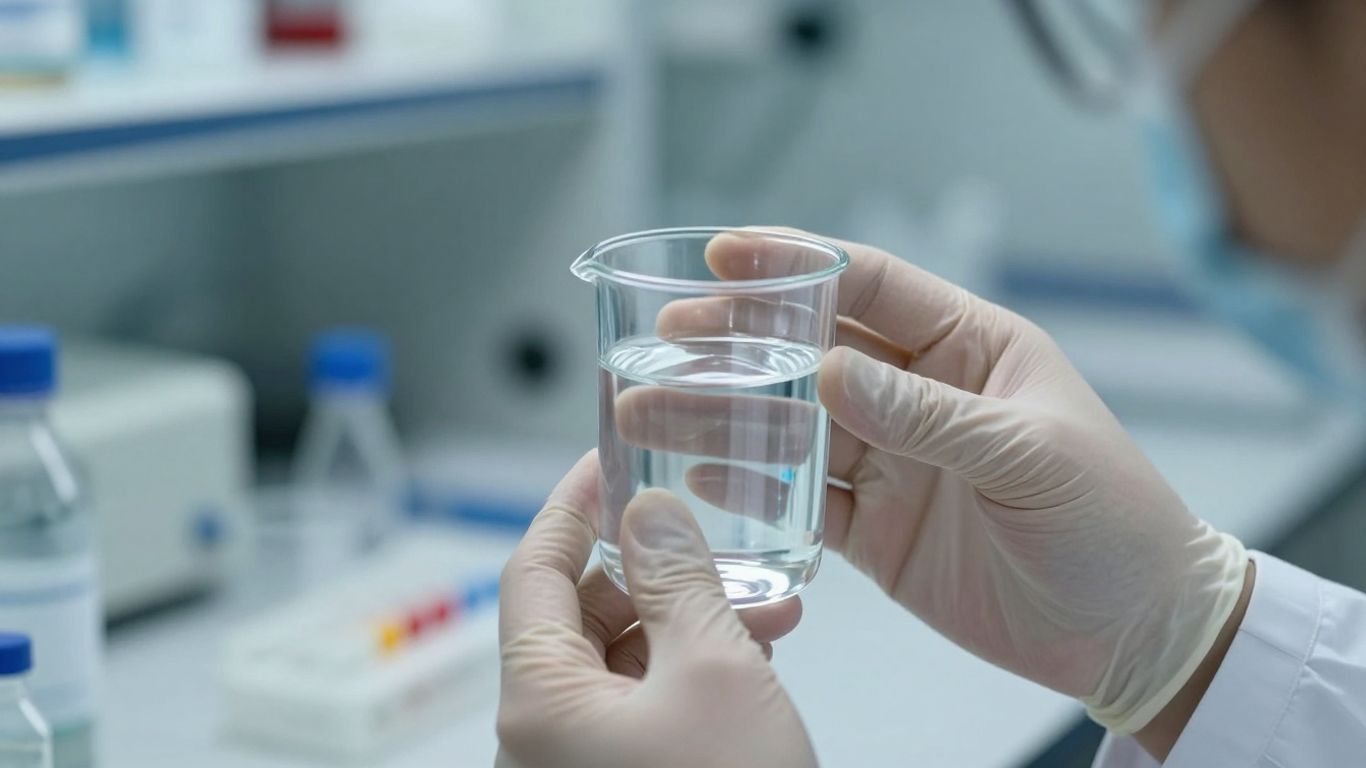
Making sure bacteriostatic water is up to snuff is a big deal in pharmaceutical quality control. It’s not just about having water; it’s about having water that’s safe and effective for its intended use, especially when it’s mixed with medications.
This is where we check for any unwanted guests, like bacteria. Even though bacteriostatic water has a preservative, it’s still important to test it. The goal is to confirm that the preservative is working and that the water itself is free from microbial contamination.
The whole point of these tests is to catch any problems early. If something’s off, we can stop it before it causes issues down the line.
Beyond just looking for microbes, we need to know what’s actually in the water and if it’s pure enough. This involves checking the chemical makeup to make sure it matches what it’s supposed to be.
We also need to know how long the bacteriostatic water will stay good and under what conditions. This helps determine its expiration date and how it should be stored.
Bacteriostatic water for injection is essentially sterile water with a specific additive: 0.9% benzyl alcohol. This isn’t just thrown in there; it serves a very important purpose. Benzyl alcohol acts as a preservative, stopping bacteria from growing in the water. This is what makes it different from regular sterile water. Because it has this preservative, bacteriostatic water can be used multiple times from the same vial, which is super handy for certain medical uses. Without it, you’d have to use a new vial every single time, which would be a lot more wasteful and less convenient.
It’s easy to get bacteriostatic water and plain sterile water mixed up, but they’re not the same. Think of it like this:
So, the main difference is that preservative. It changes how the water can be used and stored after opening.
Multi-dose vials are a big deal in healthcare because they let us use one vial for several injections. This is where the preservative in bacteriostatic water really shines. It keeps the water safe from bacterial growth between uses. Without the benzyl alcohol, a multi-dose vial would quickly become a breeding ground for germs after the first needle puncture.
Here’s a quick rundown of why that preservative matters for multi-dose vials:
It’s important to remember that even with a preservative, maintaining sterile technique when accessing multi-dose vials is absolutely critical. Any contamination introduced can still pose a risk, even if the preservative slows down bacterial growth.
However, this preservative isn’t suitable for everyone. For instance, it’s a big no-no for newborns. The benzyl alcohol can be toxic to infants, especially premature ones, because their bodies can’t process it well. This can lead to a serious condition called "gasping syndrome." So, if a medication needs to be diluted for a baby, doctors always use preservative-free sterile water instead.
Bacteriostatic water, while useful in many adult medical applications, requires extreme caution when administered to neonates. The benzyl alcohol present as a preservative can be toxic to infants, potentially leading to a condition known as gasping syndrome. This syndrome is characterized by severe metabolic acidosis, respiratory distress, cardiovascular collapse, and neurological impairment. Therefore, bacteriostatic water is generally contraindicated for use in newborns and premature infants. Healthcare providers must always verify the product’s label and consult specific guidelines before administering any injectable medication to this vulnerable population. The decision to use bacteriostatic water in neonates should only be made in dire circumstances where no safer alternative exists, and even then, only with the lowest possible dose and careful monitoring.
Administering bacteriostatic water incorrectly can lead to several adverse outcomes. Beyond the specific risks to neonates, improper use can result in infection at the injection site due to contamination if aseptic techniques are not followed. If the water is injected intravenously, it can cause phlebitis or other vascular complications. Furthermore, using bacteriostatic water for reconstitution when a preservative-free formulation is required can introduce unnecessary benzyl alcohol into the bloodstream, leading to systemic toxicity. It’s also important to note that bacteriostatic water is not intended for spinal or epidural use due to the risk of neurotoxicity associated with benzyl alcohol.
Proper storage and handling are key to maintaining the integrity and safety of bacteriostatic water.
The presence of benzyl alcohol, while effective at inhibiting microbial growth, necessitates careful consideration of the patient population and intended route of administration. Its potential for toxicity, particularly in infants, underscores the importance of rigorous adherence to safety protocols and professional judgment in its application.
The bacteriostatic water chemist plays a key role in making sure the tests used to check the quality of bacteriostatic water are reliable. This means they have to prove that the methods used to measure things like the amount of benzyl alcohol or check for any microbial contamination actually work correctly every time. They do this by running tests on known samples and comparing the results. This validation process is super important because if the tests aren’t right, then the quality of the water can’t be trusted, which affects the medicines it’s used in.
Validating analytical methods isn’t just a suggestion; it’s a requirement. It builds confidence that the bacteriostatic water meets all the necessary standards before it’s used in drug production.
When a drug is made, especially if it’s a generic version, it needs to be the same as the original drug in terms of how it works in the body. The bacteriostatic water chemist helps with this by making sure the water used to mix or dilute the drug is consistent. If the water has the right amount of preservative and is free from unwanted stuff, it helps make sure the final drug product will behave as expected. This is important for making sure patients get the same effect from different batches or brands of the same medication.
New drugs often need to be tested in different ways, and sometimes that involves using bacteriostatic water. The chemist’s job here is to figure out the best way to use the bacteriostatic water with a new drug. They might test different amounts of the preservative or check how the water affects the drug’s stability over time. This work helps researchers figure out how to properly formulate and store new medications, making the whole drug development process smoother and more reliable.
Keeping track of everything related to bacteriostatic water is a big deal in the pharmaceutical world. It’s not just about making sure the water is good; it’s about proving it to the people who make the rules. This means detailed records and following specific guidelines.
Think of records as the backbone of quality control. For bacteriostatic water, this involves logging every step from when the raw materials come in to when the final product is shipped out. This includes:
These records are vital for tracing any issues back to their source and for demonstrating that the product consistently meets quality standards.
Bacteriostatic water isn’t something you can just pick up anywhere. It’s classified as "Rx only," meaning it requires a prescription from a healthcare provider. This isn’t just a formality; it’s a safety measure. Because bacteriostatic water is often used to dilute or reconstitute injectable medications, its misuse without medical supervision could lead to serious health problems. This prescription requirement helps ensure that it’s used appropriately and under the guidance of a medical professional.
The Food and Drug Administration (FDA) sets the standards for pharmaceuticals in the United States. For bacteriostatic water, compliance means adhering to regulations like Current Good Manufacturing Practices (cGMP). These guidelines cover all aspects of production and quality control to make sure that drugs are safe, effective, and pure. The bacteriostatic water chemist plays a key role here by making sure all testing methods are validated and that the water produced meets all the specifications laid out by the FDA. This includes proper labeling, packaging, and distribution practices. It’s a lot to keep up with, but it’s all part of making sure patients get safe and reliable medications.
The documentation trail for bacteriostatic water is extensive. It serves not only as proof of quality for regulatory bodies but also as a reference for continuous improvement within the manufacturing process. Every piece of paper, every digital entry, contributes to the overall safety and efficacy of the final drug product.
Making sure everything follows the rules and having the right paperwork is super important. We help you keep track of all the necessary documents so you don’t have to worry. Want to learn more about how we make compliance easy? Visit our website today!
So, when you think about making sure medicines are safe and work right, it’s not just about the main drug itself. Things like bacteriostatic water, which seems pretty simple, actually need careful handling. A chemist who knows their stuff about these kinds of solutions plays a big part in keeping everything up to par. They help make sure the water is pure, the preservative is just right, and that it won’t mess with the medicine it’s mixed with. It’s a behind-the-scenes job, for sure, but it really matters for the quality of the final product we all rely on.
Bacteriostatic water is like sterile water, but it has a special ingredient called benzyl alcohol. This ingredient acts as a preservative, stopping tiny germs from growing inside. Because of this, bacteriostatic water can be used multiple times from the same bottle for up to 28 days after you first open it. Regular sterile water has no preservative, so it’s meant for just one use and must be thrown away after that.
Babies, especially those born early, have bodies that are still developing and can’t process the benzyl alcohol in bacteriostatic water very well. This preservative can build up in their bodies and cause a serious health problem called ‘gasping syndrome.’ It can lead to breathing trouble and can even be deadly. That’s why doctors always use preservative-free sterile water when preparing medicines for newborns.
No, you should never inject bacteriostatic water on its own. It’s only meant to be used to mix with or dissolve other medications. Injecting plain water directly into your veins can cause your red blood cells to burst because the water isn’t balanced correctly with your body’s fluids. Always mix it with a medication as directed.
Bacteriostatic water itself doesn’t usually cause many problems. Most of the time, any discomfort, like a little sting or redness at the injection spot, is from the needle or the medicine you’re mixing. If bacteriostatic water gets contaminated or isn’t used right, it could lead to infections or swelling. Serious reactions are very rare, especially in adults.
Yes, in the United States, bacteriostatic water is considered a prescription item. This means you can’t just buy it at any store. You need a valid prescription from a doctor or other healthcare professional, and it must be filled at a licensed pharmacy. This rule is in place because it’s used to prepare injectable medicines, and it needs to be used under medical guidance.
Unopened bottles of bacteriostatic water can last for a long time, often 2 to 3 years, but always check the expiration date printed on the bottle. Store them in a cool, dry place away from direct sunlight. Keep the bottle sealed and clean until you’re ready to use it. If you see any cloudiness or particles in the water, don’t use it.
 by
by