Best Peptides for Fat Loss Research 2026: A Comparative Guide
Why are 68% of metabolic studies still struggling to differentiate between simple appetite suppression and genuine cellular lipolysis? You’ve likely...
 Are you over 18 years old?
This website requires you to be 18 years or older to enter our website and see the content.
Are you over 18 years old?
This website requires you to be 18 years or older to enter our website and see the content.

The world of peptides for research purposes is complex and often confusing, especially when looking at various peptide labs reviews. Many people are curious about their potential benefits for wellness and fitness, but the unregulated market presents significant risks. It’s important to understand what these compounds are, why they aren’t meant for human use when bought from research vendors, and what dangers lurk in purchasing them without proper guidance. This article aims to shed light on these issues, helping you make informed decisions.

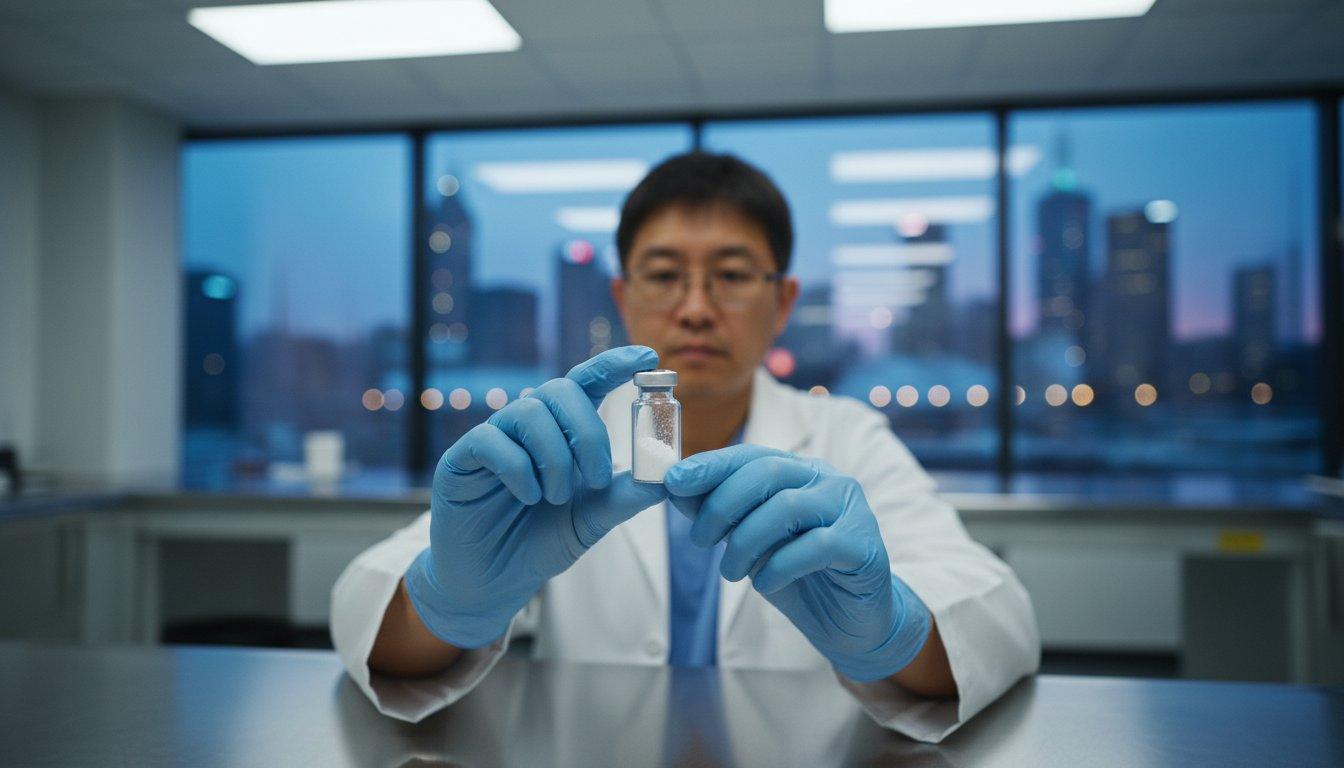
Peptides are short chains of amino acids, the building blocks of proteins. Think of them as tiny messengers within your body, playing a role in countless biological processes. They can act as hormones, neurotransmitters, or growth factors, influencing everything from cell signaling to tissue repair. In a laboratory setting, research-grade peptides are synthesized compounds used for scientific study. These substances are specifically produced for experimental purposes and are not intended for human consumption. Their primary function in research is to help scientists understand complex biological pathways and mechanisms.
Research peptides generally fall into a few broad categories based on their function:
Understanding these categories helps researchers identify the right tools for their specific experiments.
When working with any chemical compound for research, purity is paramount. Impurities can lead to skewed results, making experiments unreliable. For research-grade peptides, this means they should be produced with high precision and undergo rigorous testing to confirm their identity and concentration. Analytical testing, often through methods like High-Performance Liquid Chromatography (HPLC) and Mass Spectrometry (MS), verifies that the peptide is what it claims to be and that it meets specific purity standards. Without this verification, the data generated from experiments could be misleading.
The integrity of research findings hinges on the quality of the materials used. For peptides, this means a commitment to purity and accurate characterization is not just good practice; it’s a scientific necessity.
When you see peptides advertised online, especially those labeled "research use only" or "not for human consumption," it’s easy to think it’s a simple way to access potential health benefits. However, this path is fraught with significant dangers that most people don’t consider until it’s too late. These products are not made with the same care or oversight as medications prescribed by a doctor, and using them without professional guidance can lead to serious health issues and even legal trouble.
The most critical point to grasp is that peptides sold for research purposes are not intended for people. They bypass the rigorous testing, quality control, and regulatory checks that pharmaceutical-grade products undergo. This means there’s no guarantee of what you’re actually getting. Independent lab tests have frequently found that these "research" peptides can contain contaminants, harmful additives, or simply the wrong compound altogether. When you inject something into your body, especially a biologically active substance like a peptide, you need to know exactly what it is. Uncertainty here can quickly turn into a dangerous situation.
Peptides are powerful substances that can influence your body’s hormones, cell communication, metabolism, and how your organs function. Without a doctor’s supervision, you’re essentially experimenting on yourself. A qualified healthcare provider performs medical evaluations, reviews your health history, and orders lab tests to tailor dosages and ensure safety. Without this guidance, you increase the risk of side effects, hormonal imbalances, unexpected reactions, or triggering underlying health conditions. You might also unknowingly combine peptides with other medications or supplements, leading to dangerous interactions. What starts as an attempt to improve your health can easily become a serious medical problem.
Peptides are sensitive. Even small changes in how they are made or stored can significantly alter their strength. Online vendors that sell research peptides don’t follow strict pharmaceutical standards and aren’t regulated, so they have no reason to make sure their products are consistent. This means the same product could be very potent one month and much weaker the next. Some batches might have impurities, while others could contain degraded compounds that don’t work. If you’re relying on precise dosing for your fitness or wellness goals, this unpredictability is not just annoying – it’s unsafe. The quality can vary wildly, and some analyses have shown significant differences in purity and potency across numerous vendors.
The idea that all peptides are safe and natural is simply not true. While some people may want to experiment with unapproved substances, it’s incredibly hard to figure out the real benefits versus the harms. Bad actors can easily market these products to people who don’t fully grasp the risks involved. Like any drug, peptides have potential side effects, but for many experimental ones, there hasn’t been enough research to know what they might be. Some scientists worry that peptides that encourage growth could also potentially encourage the growth of cancers.
Many therapeutic peptides require a prescription in the United States. When people buy them from websites claiming to sell "legal" research compounds, they often misunderstand the situation. If a product is labeled "not for human use," then using it yourself carries risks. Shipments can be stopped, and buyers might face legal issues for importing substances intended to bypass medical regulations. It’s important to understand the science behind these compounds before considering their use, as scientific evidence is still being examined for many claimed benefits.
When you’re looking into buying peptides, especially from online vendors that aren’t connected to a doctor, it’s easy to get lost in all the information. Many sites claim their products are top-notch, but how do you actually figure out if they’re telling the truth? It’s not as simple as just reading the sales pitch. You really need to dig deeper to find out what you’re getting into. The most important thing is to be skeptical and do your homework before spending any money.
Before you even think about clicking "buy," take a step back. What exactly do you need these peptides for? Be honest with yourself. Then, look beyond the fancy website and marketing talk. Compare prices, yes, but don’t let that be the only factor. Think about the total cost, including shipping and any other hidden fees. Also, pay close attention to what other people are saying. Are there common complaints popping up again and again, or are they just isolated incidents? It’s about making a smart choice, not just a quick one.
This is a big one. Many vendors will show you lab reports, but you need to know if they’re legit. Are these reports from a real, independent lab, or did the company just whip them up themselves? Look for certificates of analysis (COAs) that show the purity and concentration of the peptide. If a vendor doesn’t readily provide these, or if the reports look questionable, that’s a major red flag. You want to see proof that the product has been tested by a reputable third party, like Finnrick Analytics, which has analyzed thousands of samples from various vendors.
Customer reviews can be a goldmine of information, but you have to read them carefully. Don’t just look at the star ratings. Read the actual comments. Are people consistently complaining about slow shipping, poor product quality, or bad customer service? If you see the same problems mentioned by multiple people over time, it’s a strong indicator of ongoing issues. Conversely, if most reviews are positive and address specific benefits or good experiences, that’s a better sign. It helps paint a clearer picture of what to expect from a particular supplier.
The purchase and use of peptides exist in a complex and often murky legal space. It’s important to understand that many peptides available online are marketed strictly for research purposes. This means they haven’t undergone the rigorous testing and approval processes required for human consumption by regulatory bodies like the U.S. Food and Drug Administration (FDA).
Many compounds sold online, including peptides, are labeled "research chemicals" or "not for human consumption." This labeling is a way for vendors to operate in a legal gray area. The FDA has stated that products intended for research are not approved for diagnostic, therapeutic, or any other human use. While enforcement can be inconsistent, especially with online vendors, this classification highlights that these substances are not intended for personal use. The agency is actively working against companies marketing unapproved substances, particularly in areas like GLP-1 APIs [b25d].
The FDA has the authority to take action against companies that market unapproved drugs. This can include issuing warning letters or shutting down operations. Furthermore, compounding pharmacies, which can create custom medications, face restrictions. The FDA maintains lists of bulk drug substances that cannot be compounded due to safety concerns, and several common experimental peptides are on this list. This policy was reinforced in 2023, making it clear that certain peptides are not eligible for compounding, even if requested by a physician.
While the primary focus of regulatory action is often on vendors, buyers are not entirely without risk. Possessing or using substances intended for research and not approved for human use could potentially lead to legal issues, depending on local laws and the specific circumstances. For athletes, using banned substances can result in suspensions from competitions. It’s a situation where the lack of clear regulation creates uncertainty for everyone involved.
The online marketplace for these compounds is vast, and quality control can be a significant concern. Without proper oversight, the purity and actual contents of what you receive can be unpredictable, posing potential health risks.
When you get your hands on research-grade peptides, the first thing to think about is how to keep them in good shape. Peptides are pretty sensitive molecules, and how you handle them right after you get them can make a big difference in whether they work as expected. You’ll often find peptides come as a dry powder, usually in a little glass vial. This is called lyophilized, which basically means it’s been freeze-dried to help it last longer. To use it, you’ll need to mix it with something, usually sterile water or bacteriostatic water. This process is called reconstitution. The amount of liquid you add is important, and it’s usually specified by the vendor. Get it wrong, and you’ve got a concentration problem right from the start.
Once you’ve mixed it, the clock starts ticking. Reconstituted peptides don’t last nearly as long as the powder. Most sources say you should keep them in the fridge, and they’ll be good for a few weeks, maybe a month if you’re lucky. Some people even freeze them, but that can sometimes mess with the peptide’s structure. Always check the specific recommendations for the peptide you’re using. Different peptides have different needs, and ignoring these can lead to a product that’s less effective or, worse, completely degraded.
So, you’ve got your peptide, and you’ve stored it correctly. But how do you really know what’s in that vial? This is where independent lab testing comes in, and it’s a big deal. Many vendors will provide a Certificate of Analysis (CoA) with their products. This document is supposed to show the results of tests done on the peptide, like its purity and identity. However, not all CoAs are created equal. Some are generated by the vendor themselves, which isn’t ideal. The best situation is when a peptide has been tested by a reputable, independent third-party laboratory.
These independent labs use sophisticated equipment to check things like:
Looking for evidence of this kind of testing, especially from a lab you can verify independently, adds a significant layer of confidence. If a vendor doesn’t readily provide this information, or if their documentation seems vague, it’s a major red flag. You’re essentially trusting that what they say is in the bottle is actually there and is safe to use.
Price is always a factor, right? When you’re looking at peptides, you’ll notice a pretty wide range of costs, even for what seems like the same product. It’s tempting to just go for the cheapest option you find, but that can be a risky move. Remember, quality and purity often come at a cost. A significantly lower price might mean the peptide is less pure, has been stored improperly, or isn’t what it’s advertised to be. On the flip side, the most expensive option isn’t automatically the best either.
Here’s a quick way to think about comparing prices:
It’s wise to view price comparisons not just as a way to save money, but as a tool to identify potential quality issues. A price that seems too good to be true usually is, and a price that’s excessively high might just be padding for a brand name. Finding that middle ground, supported by solid documentation and customer feedback, is usually the sweet spot.
Ultimately, when you’re dealing with substances intended for research, cutting corners on price can lead to wasted money and unreliable results, or worse, potential health risks if the product is misused.
Peptides are potent compounds that can influence many bodily functions, from hormone regulation to cellular repair. Because of this, using them without professional guidance is risky. A doctor can assess your health, review your medical history, and determine if peptide therapy is appropriate for you. They can also identify potential interactions with other medications or supplements you might be taking. Without this medical oversight, you increase the chance of experiencing unwanted side effects or hormonal imbalances. Trying to self-administer peptides can lead to unexpected health issues, making a consultation with a qualified healthcare provider a necessary first step.
When you get peptides through a doctor, they come from sources that meet strict quality standards. These are typically FDA-regulated compounding pharmacies. This means the peptides are:
This contrasts sharply with many online vendors selling "research-only" peptides, which often lack these assurances. Choosing a medically supervised route means you’re getting a product that has undergone rigorous checks, unlike many alternatives you might find online. This is a key part of understanding peptide therapy.
Working with a healthcare provider means your peptide therapy is customized to your specific needs and goals. They don’t just prescribe a product; they create a plan. This plan includes:
This approach ensures that you’re not just using peptides, but using them effectively and safely, with a professional partner guiding you every step of the way. It removes the guesswork and potential dangers associated with unregulated sources.
Looking for a safer way to improve your health and well-being? Medically supervised peptide therapy offers a guided approach to achieving your goals. Our experts are here to help you explore this cutting-edge treatment. Visit our website today to learn more and see if peptide therapy is the right choice for you!
So, after looking into all this, it’s pretty clear that buying peptides isn’t as simple as just clicking ‘buy now.’ The stuff you see advertised for ‘research only’ is definitely not meant for people, and using it can lead to some serious health problems. Plus, there are legal questions too. If you’re actually looking to use peptides for wellness, the safest bet is to talk to a doctor. They can guide you to legitimate sources, like compounding pharmacies, and make sure you’re getting something pure and dosed correctly. It might take a bit more effort, but your health is worth it. Don’t take chances with your well-being; go the proper route.
Peptides are like tiny building blocks made of amino acids. Think of them as short chains. In research, scientists use them to study how different parts of the body work, like how cells talk to each other or how muscles grow. They are special tools for learning about biology and finding new ways to help people later on.
These peptides are not made for people to use. They don’t go through the same strict checks as medicines. This means they might not be pure, could have harmful stuff mixed in, or might not even be the right chemical. Using them is like a guessing game with your health, and that’s very dangerous.
Peptides can strongly affect your body, like your hormones and how your body functions. Without a doctor checking you, you might use the wrong amount, cause your body to react badly, or mix them with other things that cause problems. It’s important to have a doctor guide you to stay safe.
Look for proof that they test their products. Good companies will show you reports from independent labs that show how pure their peptides are. Also, read what other customers say, but pay attention to common complaints rather than just one or two bad reviews. Be careful of companies that make unbelievable promises.
Yes, there can be. If a product says ‘not for human use,’ using it yourself means you’re not following the rules. Your package could be stopped, and you might get into trouble for trying to get medicine that isn’t approved for people without a doctor’s okay.
The safest way is to talk to a doctor. They can figure out if peptides are right for you and, if so, prescribe them from a pharmacy that follows strict rules (like FDA-approved ones). This way, you know you’re getting safe, correct doses, and you have medical support throughout.
 by
by